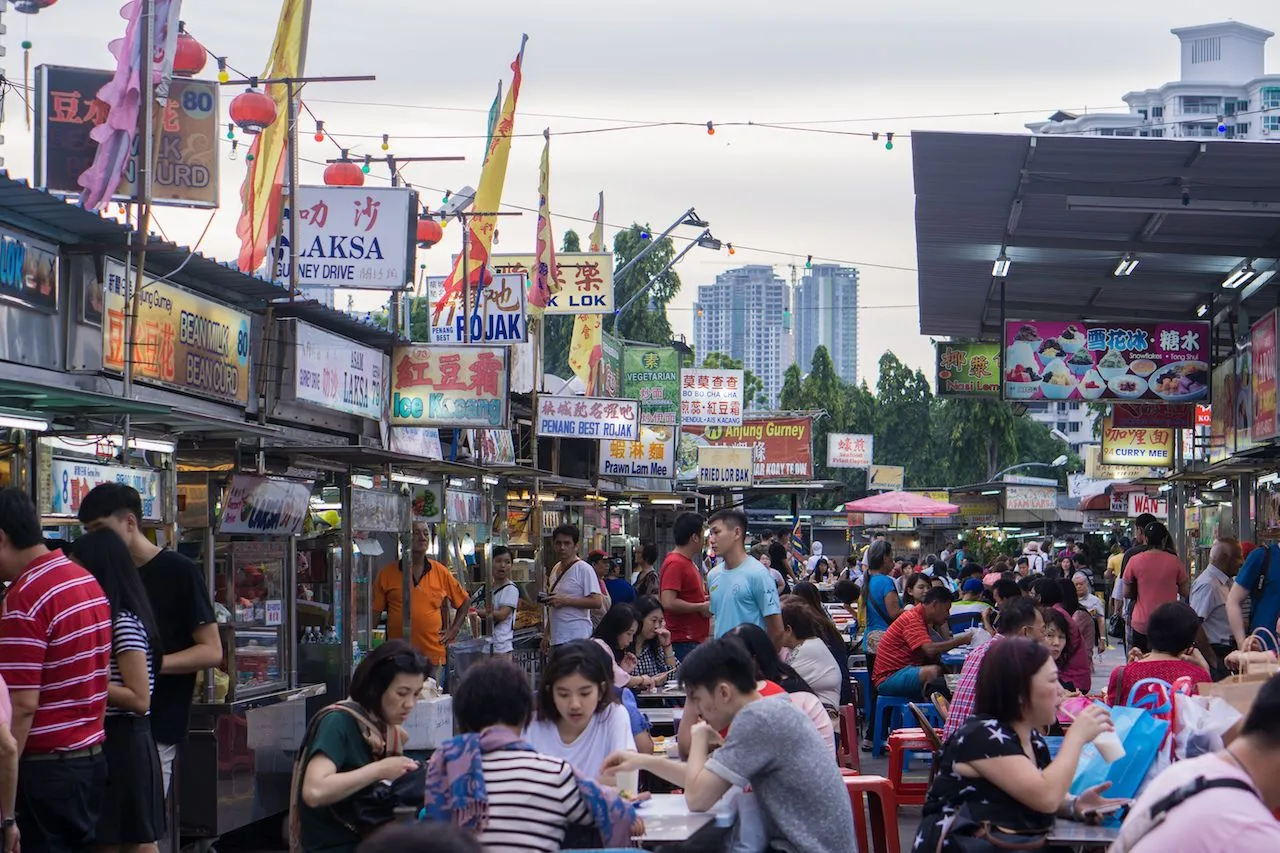
Welcome to Penang, Asia’s Undisputed Food Capital
Penang, an island state in Malaysia, holds a prestigious and well-earned title: Asia’s Food Capital. This distinction is not hyperbole, but rather a testament to a vibrant, deeply ingrained culinary culture that thrives on the streets, in hawker centers, and within the heart of the community’s needs. From bustling hawker centers to unassuming roadside stalls, Penang offers an unparalleled gastronomic adventure that rivals any global dining destination.
The island’s unique blend of Malay, Chinese, and Indian influences, combined with its rich history as a major trading port, has resulted in a diverse and complex flavor profile found nowhere else in the world. What makes Penang’s street food irresistible extends beyond deliciousness-it lies in its accessibility, affordability, and the sheer joy it brings to both locals and visitors alike.
According to recent tourism data, 8.23 million tourists stayed in Penang hotels in 2024, a remarkable testament to the island’s growing reputation as a premier food and lifestyle destination. This explosive growth underscores how Penang’s culinary excellence continues to shape travel patterns globally. For travelers researching this destination, understanding how to navigate Penang’s street food scene is essential to maximizing your visit.
Why Penang Stands Above Other Food Destinations
The difference between dining in Penang versus other Southeast Asian cities is tangible. Penang’s hawkers have perfected their craft over generations, maintaining family recipes passed down through multiple decades. Unlike tourist traps that sacrifice authenticity for volume, Penang’s street food vendors prioritize quality and tradition. This comprehensive guide ensures you experience the very best the island has to offer, from learning proper hawker etiquette to understanding payment methods and identifying quality vendors.
The Irresistible Allure of Penang Street Food: A Sensory Experience
The charm of Penang street food is multifaceted and extends across all five senses. It’s an experience that engages the sights, sounds, and smells simultaneously-creating a memorable culinary journey. The appeal lies not merely in eating, but in becoming part of a living, breathing food culture that defines community life.
The Sensory Symphony of Hawker Life
Walking through a hawker center is an immersive experience unlike any formal dining establishment:
- The Sizzle and Scent: The distinctive wok “hei” (breath of the wok) creates aromatic smoke that’s become synonymous with authentic street food. The sizzle of prawns hitting hot oil, the fragrant spices of curry, and the sweet perfume of tropical fruits fill the air.
- Visual Vibrancy: Vendors expertly maneuver their woks, customers queue patiently, and families share meals at communal tables. This is a kaleidoscope of activity where tradition meets modern tourism.
- Auditory Energy: The rhythmic clanging of spatulas, the hiss of oil, friendly banter between vendors and patrons, and the general hum of community coming together create an atmosphere money cannot buy.
- The Taste and Texture Complexity: Each dish offers layers-sweet, sour, spicy, and savory working in harmony. The interplay of textures (crispy, creamy, chewy) makes each bite an adventure.
Community and Culture Beyond the Plate
Hawker stalls serve as social hubs where people gather to share meals and conversations. This is where locals return daily, where children accompany grandparents to favorite vendors, and where the transmission of culinary knowledge happens naturally. The sheer variety is astounding, offering something to please every palate-whether you’re a seasoned foodie, a curious traveler, or someone with specific dietary preferences.
The authenticity and passion poured into every dish are palpable. This deep connection to food is evident in how younger demographics in Malaysia show a strong preference for street food and hawker stalls, ensuring the tradition continues to thrive for future generations. This trend indicates that Penang’s street food culture is not an aging tradition but a vibrant, evolving scene.
What This Guide Covers: Your Culinary Compass and Navigation Tool
This comprehensive guide is designed to be your ultimate resource for exploring Penang’s legendary street food scene. Whether you’re planning your first visit or returning to discover new favorites, this pillar page addresses every aspect of the street food experience.
Complete Coverage Areas
Iconic Dishes Deep Dive: We provide an exhaustive exploration of the island’s most celebrated dishes, including:
- Char Koay Teow (wok-kissed flat noodles)
- Assam Laksa (tangy fish-based soup)
- Curry Mee (rich coconut-based noodle soup)
- Chendul (icy sweet refresher)
- Beyond these “iconic four,” we introduce other must-try local delicacies
Practical Navigation Intelligence: This guide provides actionable advice on:
- How to navigate hawker centers and street locations
- Understanding and respecting local customs
- Finding the best spots using modern technology and local knowledge
- Identifying stalls with excellent hygiene ratings (Grade A, B, C system)
Logistical Intelligence: Essential information on:
- Transportation options: walking, ride-sharing via Grab, public buses
- Budgeting strategies: cost expectations and payment methods
- Hygiene and food safety: understanding the grading system and making safe choices
- Payment solutions: cash requirements, e-wallet options, and ATM locations
- Communication guidance: key phrases in Bahasa Melayu for ordering and directions
Interactive Resource Tools: We incorporate digital solutions including:
- Interactive maps pinpointing key locations and address data
- GPS coordinates for major hawker centers
- Operating hours and closure days
- Visual guides to identify quality vendors
- Local tips for optimal timing and queue management
Your Pathway to Authentic Discovery
Our aim is to equip you with everything needed to discover the true heart of Penang’s food culture. This isn’t a guide that merely lists restaurants-it’s a comprehensive resource that prepares you for genuine street food exploration, cultural immersion, and memorable dining moments.
Understanding Penang Street Food Culture: More Than Just Food
Penang’s street food culture is a living, breathing entity, deeply woven into the fabric of daily life on the island. Understanding this culture provides a richer appreciation for the food itself and transforms dining from consumption into cultural participation.
The Historical and Cultural Significance
Penang’s unique position as a major trading port with multiple ethnic communities created conditions for extraordinary culinary fusion. The presence of Malay, Chinese, Indian, and other communities meant that cooking techniques, ingredients, and flavor preferences merged over centuries. This is not fusion in the modern marketing sense-it’s authentic evolution born from genuine cultural intersection.
The street food vendors you encounter today often represent families with generations of culinary expertise. Some stalls operate from the same location for 50+ years, with recipes refined through thousands of daily iterations. This institutional knowledge means consistency and quality that formal restaurants struggle to achieve.
The Hawker Experience: Sights, Sounds, and Smells
Visiting a hawker center in Penang is an immersive sensory experience that no formal guide can fully capture. The environment itself is the experience.
The Atmospheric Elements:
- Air thick with symphony of aromas: char of barbecued satay, fragrant spices of curry, savory scent of stir-fried noodles, sweet perfume of tropical fruits
- Visually: a kaleidoscope of activity with vendors expertly maneuvering their woks, customers queuing patiently, and families sharing meals at communal tables
- Sounds: rhythmic clanging of spatulas against woks, sizzle of oil, friendly banter, and the general hum of community engagement
This dynamic environment is the soul of Penang’s food scene. It’s impossible to replicate in modern restaurants with air conditioning and music. The authenticity lies in the chaos, the heat, the crowds, and the genuine interaction.
Unwritten Rules: Etiquette, Ordering, and Seating Protocols
Understanding hawker culture requires learning informal but important guidelines that ensure a smooth experience:
Patience and Timing Strategy
- Peak hours (breakfast 7-9 AM, lunch 11 AM-2 PM, dinner 5:30-8 PM) mean longer waits
- Look for stalls with long queues-this is usually a sign of excellent food
- Non-peak hours offer better seating but slightly slower service
- Popular stalls may have 20-30 minute waits; plan accordingly
Ordering Protocols
- Be clear and concise: Point or state your dish name clearly
- Know the local language advantage: Many vendors speak basic English, but learning key Bahasa Melayu phrases significantly enhances the interaction
- Portion size communication: Understand that portion sizes vary; some dishes are meal-sized, others are light snacks
- Spice level designation: Always confirm spice levels (“pedas” = spicy, “tidak pedas” = not spicy)
- Payment timing: Understand you typically pay when the food is ready, not when you order
Seating and Table Management
- Find tables first: The common practice is to secure a table before ordering from vendors
- “Chope” system: If you see an umbrella, packet of tissues, or a plastic bag on a table, the seat is taken (this is a universal seating protocol called “chope”)
- Shared tables are normal: Don’t hesitate to sit at occupied tables if there’s space; nod and smile
- Clear your table: Remove used crockery once finished-this shows respect and frees space for others
- Hand sanitizer and tissues: Always carry these; use tissue to protect your hands when taking food
Navigating the Scene: Identifying Stalls and Using Local “Addresses”
One of the most common challenges for visitors is finding specific hawker stalls. Understanding the address system in Penang differs significantly from typical United States postal address formats. Rather than relying on house numbers and postal codes like in Western systems, Penang uses a more flexible, landmark-based addressing system.
The Penang Addressing System vs. Traditional Postal Services
Hawker stalls don’t always have formal addresses in the traditional sense. Unlike the U.S. Postal Service which uses precise ZIP Code systems and street type designations, Penang relies on descriptive local knowledge:
- Street names are primary identifiers
- Locality or neighborhood provides context
- Well-known landmarks serve as navigation points
- Business names become the de facto “address data”
For example, a famous stall might be known as:
- “The Char Koay Teow stall on Macalister Lane”
- “The Laksa near Padang Brown hawker center”
- “The Curry Mee at Lebuh Kimberly”
Using Address Data and Geographic Information Systems
Modern tools now provide address verification capabilities:
Google Maps and GPS Technology:
- Most major hawker centers now have precise address elements on Google Maps
- Individual stalls increasingly have address bar listings with coordinates
- Search results return specific street name and house number information where available
- Photos and reviews help identify the exact location
Understanding Street Naming:
- Lebuh (or Jalan) = Street
- Lorong = Lane
- Gat = Path
- These street type designations help orient yourself
Alternative Navigation Methods
While GPS addresses are becoming standard, locals often rely on traditional methods:
- Ask multiple people: Directions improve with each query
- Visual landmarks: Specific shops, temples, or schools serve as waypoints
- Word-of-mouth verification: The most reliable method for discovering hidden gems
- Local guides: Consider hiring a guide for first-time exploration
When asking for directions, be specific:
- Instead of a postal code or ZIP Code, reference the district (George Town, Pulau Tikus, Jelutong)
- Use street names as your primary identifier
- Mention nearby landmarks or previous stalls you’ve visited
- Be patient-directions might involve walking through narrow alleyways
Food Hygiene and Safety Standards: Understanding the Rating System
Penang’s government implements a rigorous hygiene rating system for food establishments that provides transparent food safety standards:
The Grading System Explained
| Grade | Score Range | What It Means |
|---|---|---|
| Grade A | 86-100 points | Excellent hygiene standards; highly recommended |
| Grade B | 71-85 points | Good standards; generally safe |
| Grade C | 51-70 points | Acceptable standards; proceed with caution |
| Below C | <50 points | Establishment is closed by authorities |
Key Inspection Criteria
Authorities assess:
- Food handling methods and food preparation techniques
- Equipment and utensils sanitation standards
- Water supply and drainage systems
- Waste disposal methods
- Floors, walls, ceilings, and ventilation quality
- Toilet facilities cleanliness and functionality
How to Verify Ratings
- Look for rating certificates posted prominently in stalls
- Ask vendors directly about their hygiene rating
- Check Google Business listings which sometimes display ratings
- Use address verification tools to research stalls before visiting
Practical Safety Guidelines
- Peak-hour advantage: Food prepared during busy times is fresher and has faster turnover
- Visual inspection: Avoid stalls with visible cleanliness issues
- Staff handling: Observe if vendors use clean utensils and handle food appropriately
- Local frequency: High density of local customers suggests good safety standards
- Gradual introduction: Start with milder dishes and build spice tolerance
Important Note: While Penang’s hawker food is generally safe, travelers with sensitive digestive systems should exercise caution. The combination of heat, new bacteria, and rich spices can affect newcomers.
The Iconic Four: A Deep Dive into Penang’s Must-Try Dishes
Penang’s culinary crown jewels are four dishes so beloved and ubiquitous that they form the backbone of the island’s street food identity. These are non-negotiable items-you absolutely cannot leave without trying them.
Char Koay Teow: The Wok-Fired Masterpiece
Char Koay Teow (meaning “stir-fried rice cake strips”) is arguably Penang’s most famous dish globally. This seemingly simple noodle stir-fry is a profound testament to the chef’s skill and the magic of a well-seasoned wok.
What You’re Eating
The dish begins with flat rice noodles that are stir-fried over high heat with:
- Fresh prawns (shrimp)
- Cockles (blood clams)
- Bean sprouts
- Chinese chives
- Eggs (often two or three)
- Dark soy sauce and chili paste base
The preparation creates a slightly charred, smoky flavor profile that distinguishes exceptional versions from mediocre ones.
The Secret: “Wok Hei” (Breath of the Wok)
The key to an exceptional Char Koay Teow is “wok hei“-a smoky, almost caramelized aroma imparted by the intense heat of the wok. Many acclaimed vendors achieve this using charcoal fires rather than gas stoves, creating dramatically superior results. The high temperature causes a slight charring on the noodles, developing complex flavors through the Maillard reaction (the same browning process that creates crust on steak).
Finding the Best: Location and Authenticity Indicators
The addresses for the best Char Koay Teow stalls are often fiercely guarded secrets passed down through families. While there’s no specific ZIP Code for a particular hawker stall, its street name location is paramount:
Legendary Locations:
- Siam Road: Famous charcoal-fired Char Koay Teow with Michelin Bib Gourmand recognition
- Ah Leng’s (Jalan Dato Keramat area): Known for giant prawns and mantis shrimp options
- Lorong Selamat: The version prepared by “the aunty in the beret”
- Kimberley and Cintra streets corner: High-quality, consistently excellent versions
Practical Information for Visitors
- Expected cost: RM 8-12 (approximately $2-3 USD) for a standard portion
- Opening times: Usually 6 AM-3 PM (morning vendors) or 4 PM-midnight (evening)
- Ordering tips: Specify spice level and any protein preferences
- Payment method: Most stalls are cash-only; ATMs are nearby at major centers
- Important note: Not halal-contains pork and is cooked in lard; the lard is what gives it the rich flavor
Assam Laksa: A Symphony of Sweet, Sour, and Spicy
Penang Assam Laksa represents a flavor explosion unlike any other dish on the island. This is comfort food elevated to an art form-a carefully balanced broth that showcases the complexity possible in street food.
The Flavor Profile
This fish-based noodle soup is characterized by its tangy and sour broth, made from:
- Tamarind (assam) for sourness
- Lemongrass for aromatic brightness
- Chili for heat
- Various herbs and spices for depth
- Fish stock for umami
The broth is served with:
- Thick rice noodles (thicker than usual ramen-style noodles)
- Shredded fish (usually mackerel-fresh and flaky)
- Cucumber slices for cooling contrast
- Pineapple chunks for sweetness
- Onions for sharpness
- Fresh mint for aromatic freshness
- Shrimp paste (hae ko) for funky, savory depth
The Experience
The interplay of sweet, sour, spicy, and savory creates a complex, addictive flavor profile that’s impossible to replicate elsewhere. The acidity from tamarind, the cooling effect of cucumber and pineapple, the heat of chili, and the umami from fish paste create perfect balance. Many visitors find this their favorite dish by the end of their Penang visit.
Finding Authentic Assam Laksa
Truly exceptional Laksa requires local knowledge:
Highly Recommended Locations:
- Ayer Itam Market Area: Traditional laksa vendors with 30+ years of history
- Specific stalls near Air Itam Market: Various vendors operate along Jalan Pasar
- Open air hawker areas: Usually morning and midday only (6 AM-2 PM)
Visitor Practicalities
- Expected cost: RM 5-8 (approximately $1.50-2 USD)
- Best time: Mornings (8-11 AM) when broth is freshly prepared
- Ordering variation: Ask for “pedas” (spicy) or “tidak pedas” (not spicy) versions
- Closed days: Many stalls close on Tuesdays; verify before visiting
- Payment: Cash essential; no e-wallets at most stalls
- Spice tolerance: This dish has significant heat; start with the non-spicy version
Curry Mee: Rich & Creamy Noodle Delight
Curry Mee (also known as Curry Noodles) is a comforting and flavorful dish that showcases Penang’s vibrant Indian and Chinese culinary fusion. If you appreciate rich, aromatic dishes, this is essential.
Composition and Flavor Profile
The foundation is a rich, spicy coconut milk-based curry broth, often infused with:
- Chili paste for heat
- Various spices (turmeric, coriander, cumin) for aromatic complexity
- Coconut milk for creamy richness and mouthfeel
The broth is served with:
- Yellow egg noodles and thick rice noodles (combination creates textural interest)
- Prawns for sweetness and protein
- Cockles for chewy texture
- Tofu puffs for absorbent, spongy texture
- Bean sprouts for crunch
- A dollop of sambal chili for additional heat and flavor
Variations Across Vendors
Each vendor has their unique take on the broth’s consistency, spice level, and ingredient ratios. Some versions are:
- Thin and light: More like a soup
- Thick and creamy: Almost stew-like
- Heavily spiced: Challenging for heat-sensitive palates
- Seafood-heavy: Premium versions with additional protein
Finding Quality Curry Mee
To find excellent Curry Mee, ask locals for their preferred street name or location:
Notable Vendors:
- Lebuh Kimberly area: Multiple highly-rated curry mee stalls
- Tuai Pui Curry Mee (No. 23, Lebuh Kimberly): Uses multiple curry types for complexity
- Kafe Heng Huat surroundings: White curry mee with excellent seafood
- Taman Bukit area: Different curry styles worth exploring
Visitor Information
- Expected cost: RM 6-10 (approximately $1.50-2.50 USD)
- Best time: Lunch hours (11 AM-3 PM) or early evening
- Ordering customization: Specify noodle preferences and spice level
- Portion size: Often generous; consider sharing
- Payment method: Cash-only at most stalls
- Dietary note: Contains seafood; vegetarian versions may not be available
Chendul: The Icy Sweet Refresher
Chendul (also spelled Chendol) is a delightful dessert that provides the perfect antidote to tropical heat and the spicy kick of savory dishes. This is cooling, sweet, and deeply satisfying on hot afternoons.
What It Contains
Chendul is a simple yet incredibly satisfying concoction of:
- Shaved ice (finely crushed ice for ideal texture)
- Pandan-flavored green jelly noodles (the “chendul”-thin, noodle-like strands with distinctive pandan flavor)
- Sweet red beans (soft, earthy sweetness)
- Palm sugar syrup (gula melaka) (dark, rich sweetness with caramel notes)
- Fresh coconut milk (generously doused for creamy richness)
The Sensory Experience
The balance of creamy, sweet, and icy textures is pure bliss. Each spoonful combines:
- Cold ice sensation
- Chewy pandan noodles
- Soft bean texture
- Coconut creaminess
- Caramel sweetness
It’s refreshment without heaviness-perfect after a spicy Laksa or Curry Mee.
Finding Exceptional Chendul
While Chendul stalls are common throughout Penang, some specific addresses are renowned for exceptional versions:
Highly Recommended Vendors:
- Penang Road Famous Teochew Chendul (Penang Road): Often has long queues; legendary status
- Opposite stall (Penang Road): “Penang Road Famous Chendol”-locals claim it’s equally good
- Nyonya Chendol (opposite Kopitiam Keng Kwee Street): Local favorite with consistent santan quality
- Various hawker centers: Gurney Drive, Padang Brown, Cecil Street have quality options
Visitor Practicalities
- Expected cost: RM 3-5 (approximately $1-1.50 USD)
- Best time: Mid-afternoon (2-5 PM) when heat is most intense
- Ordering note: Ask for your preferred sweetness level
- Payment: Usually cash, though some accept e-wallets
- Increasing tourism impact: The 8.23 million tourists in 2024 means finding a quiet Chendul stall can be pleasant challenge
- Shelf life: Consume immediately; doesn’t travel well
Beyond the Iconic Four: Essential Penang Street Foods
While Char Koay Teow, Laksa, Curry Mee, and Chendul are non-negotiable, Penang’s culinary landscape extends far beyond these four dishes. True food enthusiasts should explore additional specialties.
Hokkien Mee: Penang’s Distinct Prawn Noodle Soup
Penang’s Hokkien Mee is fundamentally different from versions in other Malaysian states, making it essential to try the local interpretation. This flavorful prawn noodle soup is a study in broth excellence.
What Makes It Distinct
The defining characteristic is a rich, spicy broth made from boiling prawn shells and heads. This creates intense umami and seafood flavor impossible to achieve with simple stock. The broth develops complexity through:
- Prawn shell essence
- Various spices and aromatics
- Sometimes chili paste for heat
- Natural seafood sweetness
Composition
Served with:
- Yellow noodles and rice vermicelli (combination for textural contrast)
- Fresh prawns (for protein and sweetness)
- Kangkung (water spinach) (for slight bitterness and crunch)
- Bean sprouts (for freshness)
- Hard-boiled egg (for richness)
- Often accompanied by sambal for additional heat
Finding the Best
Identifying quality Hokkien Mee requires local knowledge:
Recommended Locations:
- Old Green House, Burma Road: Local favorite with excellent stock; known for variety of add-ons (pork ribs, Chinese sausages, chicken feet, braised egg, intestines)
- Ah Soon Kor area: Praised for stock quality using proper prawn shell concentration
- Pulau Tikus Market vicinity: Multiple quality vendors
Visitor Information
- Expected cost: RM 6-9 (approximately $1.50-2 USD)
- Opening times: Often morning/midday (7 AM-2 PM)
- Ordering customization: Request specific protein add-ons
- Payment method: Primarily cash
- Note: This dish often features seafood that’s sweet but can be polarizing for some palates
Rojak: The Flavorful Fruit and Vegetable Salad
Rojak is a unique Malaysian salad offering a delightful mix of textures and flavors-a refreshing counterpoint to heavier noodle dishes.
Components
A vibrant medley of:
- Fresh jicama (crisp, slightly sweet root vegetable)
- Cucumber (cooling, watery)
- Pineapple (sweet, tart)
- Apple (crisp, slight tartness)
- Tossed in thick, sweet, and savory shrimp paste dressing (pungent, complex flavor)
- Garnished with crushed peanuts for nutty richness
- Sometimes topped with fried dough fritters for crispy texture
The Flavor Balance
The combination of sweet, tangy, slightly pungent flavors with the crunch of fresh produce and nuts makes Rojak a refreshing and exciting appetizer or light meal. It’s particularly good on hot days when heavier noodle dishes feel overwhelming.
Where to Find Quality Rojak
Noted Locations:
- MacCallum Street area: “Penang Famous Hock Seng Rojak”
- Gurney Drive Hawker Centre: Multiple vendors; consistent quality
- New World Park: Traditional versions
- Various hawker centers: Rojak is widely available
Visitor Details
- Expected cost: RM 4-6 (approximately $1-1.50 USD)
- Best time: Any time; particularly refreshing at midday
- Dietary note: Vegetarian-friendly
- Payment method: Cash or some e-wallet options at larger centers
Popiah: Fresh Spring Rolls Done Right
Popiah refers to fresh spring rolls, a lighter option that’s incredibly popular and offers delicate flavors distinct from fried spring rolls found in Western Chinese restaurants.
What’s Inside
Typically made with:
- Thin, translucent crepes (thin enough to be semi-transparent)
- Shredded jicama (bang kuang) (crisp, sweet)
- Carrots (crisp, slightly sweet)
- Lettuce (fresh, light)
- Bean sprouts (crisp, fresh)
- Sometimes peanuts or crispy bits for crunch
- Filling is sautéed and seasoned before wrapping
Served with:
- Sweet chili sauce for sweetness and heat
- Savory garlic-soy sauce for umami
- Allows customization of flavor intensity
The Experience
These are lighter than their fried cousins, making them ideal for those wanting something fresh or less heavy. The contrast between soft crepe and crispy filling creates interesting texture play.
Finding Good Popiah
Quality Locations:
- Padang Brown Seafood Popiah (between Jln. Anson & Jln. Perak): One of oldest stalls in Penang; uses crab meat (unusual), turnip, and prawn stock
- Various hawker centers and food courts: Generally available
- Morning stalls often have fresher prepared versions
Visitor Information
- Expected cost: RM 3-5 (approximately $1-1.50 USD)
- Best time: Any time; popular as snack or light meal
- Dietary note: Vegetarian versions available; vegetable-based
- Payment method: Cash-only or limited e-wallet acceptance
- Note: Seafood Popiah is premium version worth seeking
Oyster Omelette (O-Chien): Savory Seafood Treat
Oyster Omelette (O-Chien) is a popular hawker dish that balances soft, gooey eggs with chewy, plump oysters and a crispy, starchy exterior-creating textural complexity.
Preparation and Components
The dish is prepared by:
- Stir-frying oysters with eggs and tapioca starch
- Creating a delightful contrast in textures: soft interior, crispy exterior
- Seasoning with soy sauce
- Served with chili sauce on the side
Flavor and Texture Profile
The combination of tender oysters, creamy eggs, and crispy exterior creates multiple sensations in a single bite. The tapioca starch creates an almost crepe-like exterior that contrasts with the soft interior.
Where to Find Quality O-Chien
While not as universally famous as Char Koay Teow, quality versions are:
- Widely available in hawker centers
- Featured at Gurney Drive and other major centers
- Cecile Street Market area: Multiple options
- Night market stalls: Evening vendors often have excellent versions
Visitor Details
- Expected cost: RM 5-8 (approximately $1.50-2 USD)
- Best time: Evening hours when fresh oysters are available
- Ordering note: Ask for “not too oily” if you prefer lighter versions
- Payment method: Cash-only typically
- Note: Quality depends heavily on oyster freshness
Additional Must-Try Dishes
Roti Canai: Flaky flatbread served with curry or dhal-perfect breakfast or light meal
Nasi Kandar: Steamed rice with multiple curry sauces and meat; customizable protein
Satay: Grilled meat skewers with peanut sauce-particularly good at night markets
Lor Mee: Thick, sticky gravy noodles with balance of sweet, sour, spicy flavors
Nasi Lemak: Coconut rice with curry, sambal, and various accompaniments
Fried Oysters (Fried O-Chien): Crispy fried version of the omelette
Wanton Noodles: Thin egg noodles with wonton dumplings
Pasembur: Similar to Rojak but different preparation method
Muar Chee: Sticky glutinous balls with peanut coating-sweet snack
Navigating Penang’s Hawker Havens: Practical Tips & Interactive Maps
Successfully exploring Penang’s street food scene requires preparation and local insight. This section provides practical tools and actionable knowledge to make your culinary adventure seamless and authentic.
Getting Around George Town: Transportation Options and Logistics
George Town, Penang’s capital, is a UNESCO World Heritage Site and the undisputed heart of street food culture. Understanding how to navigate this city is essential for food tourism success.
Driving vs. Walking
Walking (Recommended for Food Tourism):
- Best way to discover hidden gems
- Allows you to soak in atmosphere and street life
- Perfect for following your nose to food-scented alleyways
- Heritage zone particularly walkable
- Slow pace enables conversation with locals
Challenges with Driving:
- Parking is notoriously difficult in George Town
- Street layouts can be confusing for visitors
- Traffic congestion during peak hours
- Parking fees are required in most areas
Ride-Sharing (Grab App):
- Widely available and convenient
- Affordable way to travel between distant hawker centers
- Good option for late-night returns to hotels
- Apps work well with Google Maps for destination entry
- Estimated cost: RM 5-12 for typical George Town rides
Public Buses:
- Budget-friendly option
- Slower than taxis/Grab but economical
- Useful for longer distances (e.g., to Ayer Itam for laksa)
- Route maps available at bus stations
- Free CAT bus operates within Georgetown
Address Navigation in Penang
Unlike typical Western postal systems with ZIP Codes and street numbers, Penang’s addressing requires understanding local systems:
- Street names are primary identifiers (Jalan = street, Lorong = lane)
- Landmark references (“near the temple,” “opposite the market”) are crucial
- District designation (George Town, Pulau Tikus, Jelutong) provides broad location
- Business name becomes the address for hawker stalls
When using Google Maps:
- Input street names rather than postal codes
- Allow GPS coordinates to guide final navigation
- Use search results to identify stalls with location data
- Reference restaurant names as address elements
Penang’s Major Hawker Centers and Food Locations
Understanding the geography of Penang’s food scene helps optimize your itinerary:
George Town Centers
Gurney Drive Hawker Centre
- Location: Jalan Sultan Ahmad Shah, George Town
- Operating hours: 5 PM-1 AM daily (evening/night market style)
- Specialty: Diverse cuisine including seafood, satay, nasi kandar, asam laksa
- Atmosphere: Beachfront setting with outdoor seating; lit by lanterns; popular at sunset
- Features: Excellent for evening food tours; many restaurants accept cards
- Notable stalls: Various renowned vendors; longer queues indicate quality
- Tourist-oriented: Yes; expect crowds and higher prices than neighborhood centers
Padang Brown Hawker Centre
- Location: Between Jln. Anson & Jln. Perak
- Operating hours: Afternoon-evening (specific hours vary by stall)
- Specialty: Seafood popiah, various local dishes
- Character: More local-focused than Gurney Drive
- Notable features: Open-air setting; traditional atmosphere
New Lane (Lorong Baru) Hawker Centre
- Location: Lorong Baru, George Town
- Operating hours: 4 PM-2 AM daily
- Specialty: Traditional street food; pushcart vendors
- Character: Authentic street food experience; closed to vehicular traffic
- Atmosphere: Lively, crowded, genuine local scene
- Notable dishes: Curry mee, char koay teow, various local favorites
- Tourist level: Moderately touristy but remains local-focused
Cecil Street Market
- Location: Lebuh Cecil, George Town
- Operating hours: Afternoon onwards
- Specialty: Multiple food options; koay teow noodle soup
- Facilities: Air-conditioned sections available
Outer Area Centers
Ayer Itam Market Area (Asam Laksa Hub)
- Location: Jalan Pasar, Air Itam
- Specialty: Asam Laksa (specifically for this dish)
- Timing: Morning optimal (6-11 AM); afternoon stalls close
- Closed: Tuesdays (verify before visiting)
- Transportation: Requires bus or Grab ride from George Town
- Note: Worth the journey for authentic laksa experience
Pulau Tikus Market
- Location: Jalan Pasar, Pulau Tikus
- Specialty: Hokkien Mee, various morning dishes
- Character: Local-focused; minimal tourism
- Timing: Early morning best (7-10 AM)
- Authenticity: High; genuine local breakfast experience
Batu Ferringhi Night Market
- Location: Batu Ferringhi beach area
- Operating hours: Evening/night
- Specialty: Wide variety; seafood, satay, snacks
- Character: Beach setting; mix of food and souvenir stalls
- Tourism level: Popular with tourists but maintains local feel
Food Courts (More Hygienic, Tourism-Friendly)
Level 4, Gurney Plaza:
- Air-conditioned comfort
- Modern facilities
- Clear hygiene ratings visible (Grade A, B, C system)
- Various cuisines represented
- Card payment accepted
Gurney Paragon (Level 5, “Just Food”):
- Fully air-conditioned
- Modern venue
- Mr. Shawerma for Syrian cuisine
- Card payments accepted
- Suitable for travelers uncomfortable with street conditions
Using Interactive Maps for Optimal Navigation
While physical interactive maps are mentioned in many guides, the most practical approach for modern travelers involves digital tools:
Google Maps Strategy
- Create a custom map with your must-try stalls
- Mark locations using GPS coordinates for precision
- Note opening hours and closure days in location descriptions
- Include photos from street view for visual recognition
- Save offline version for areas with spotty connectivity
Address Data Organization
Maintain a personal document with:
- Stall name (English and local)
- Street name and neighborhood location
- Operating hours (often irregular)
- Specialties and must-order dishes
- Payment methods accepted (cash, e-wallet, card)
- Hygiene rating if available
- Average cost in Malaysian Ringgit
Practical Navigation Tools
- Moovit app: Shows bus routes and schedules
- Google Maps offline download: Download George Town area before arriving
- Language translator app: Quick reference for menu items
- Grab app: Ride-sharing and payment capability
- Local SIM card or eSIM: Better connectivity for navigation
Budgeting for Your Food Adventure: Affordability and Cost Optimization
Penang street food is renowned for its affordability, offering incredible value for money that’s difficult to find elsewhere globally. Understanding cost structures helps optimize your food budget.
Pricing Structure by Dish Type
| Dish Type | Typical Cost | What You Get |
|---|---|---|
| Light snacks (Popiah, Rojak) | RM 3-5 | Appetizer or light meal |
| Main noodle dishes (Laksa, Curry Mee) | RM 5-10 | Full meal |
| Premium dishes (Hokkien Mee with seafood) | RM 8-12 | Generous portion with quality protein |
| Street food sets (2-3 items) | RM 12-20 | Variety for 2 people |
| Desserts (Chendul, Muah Chee) | RM 3-5 | Sweet finish |
| Beverages (Coffee, tea, juice) | RM 2-4 | Drink with meal |
Monthly Impact of Food Inflation
Recent food inflation in Malaysia has risen to approximately 4.7% for food-away-from-home (June 2025). This affects pricing:
- A dish costing RM 8 in 2024 might cost RM 8.40 in 2025
- Popular items with premium proteins cost more
- Cockles (in some dishes) have seen price increases up to 400% over a decade
- Nasi lemak breakfast rose approximately 5% in 2024
Despite inflation, Penang remains remarkably economical compared to:
- Western country street food
- Formal dining restaurants
- Tourist-focused food venues
- International shopping center food courts
Cash Management Strategy
Most hawker stalls operate on a cash-only basis (approximately 99% by some estimates). This differs from major cities where digital payments dominate.
Cash Preparation:
- Withdraw RM 200-400 for a 3-day food-focused trip
- Maintain small denominations (RM 1, 5, 10 notes) for easy transactions
- Change is often provided though not always in exact amounts
- ATMs are readily available in George Town and major hawker centers
ATM Locations:
- George Town center: Multiple banks and convenience stores
- Gurney Drive area: Shopping centers with ATM access
- Tourist hotels: Usually have ATM access or exchange services
- Major shopping malls: 24-hour ATM availability
Supplementary Payment Methods
While cash dominates, some options are expanding:
E-Wallet Acceptance (Growing but Limited):
- GrabPay: More widely accepted; works if linked to overseas payment method
- Touch ‘n Go: Local e-wallet; requires local bank account
- ShopeePay: Some vendors accept this
- Limitation: Most street food stalls don’t accept e-wallets
Credit Cards:
- Rarely accepted at hawker stalls
- Works at food courts and restaurants
- Good backup for meals outside hawker environment
Practical Strategy:
- Carry primary cash reserves for hawker stalls
- Use Grab/ride-sharing for transportation (accept international cards)
- Pay with card at restaurants and shopping centers
- Keep backup card for emergencies
Hygiene and Safety: Eating Street Food with Confidence
Concerns about hygiene when exploring street food are natural and understandable. However, Penang’s hawker culture generally maintains high standards, and understanding the system helps mitigate risks.
Understanding Hygiene Ratings System
The Malaysian government’s hygiene rating system provides transparent food safety standards:
What Ratings Mean:
- Grade A (86-100 points): Excellent standards; highly recommended; most vendor equipment and facilities meet highest standards
- Grade B (71-85 points): Good standards; generally safe; some minor deficiencies
- Grade C (51-70 points): Acceptable but proceed with caution; multiple deficiencies exist
- Below C: Closed by authorities; food establishment shut down
Inspection Criteria Include:
- Food handling methods: Proper technique, temperature control
- Equipment sanitation: Clean utensils, cooking surfaces
- Water supply quality: Clean water systems
- Waste disposal: Proper refuse management
- Facility cleanliness: Floors, walls, ceilings, ventilation
How to Identify Quality Vendors
Visual Indicators of Quality:
- Cleanliness of work area and food preparation surfaces
- Busy turnover of ingredients (indicates freshness and safety)
- Vendor food handling: Careful, hygienic practices
- Display of hygiene ratings: Grade A, B, or C certificates posted visibly
- Long customer queues: Popular vendors maintain higher standards
Best Practices:
- Eat during peak meal times when food is freshly cooked and hot
- Choose stalls with the longest queues-high turnover ensures freshness
- Observe vendor practices: Do they use clean utensils? Wash hands appropriately?
- Visit established venues: Long-operating stalls have reputation to maintain
- Ask locals: Hotel staff or Thai guides can recommend safe, quality vendors
Food Safety Considerations for Travelers
Gradual Introduction Strategy:
- Start with less spicy options on first day
- Build spice tolerance gradually over your stay
- Order milder versions initially (ask “tidak pedas”)
- Introduce richer dishes (Curry Mee) after digestive adaptation
Hydration and Health:
- Drink bottled water exclusively
- Avoid ice in drinks (made from tap water) unless at established venues
- Stay hydrated in tropical climate
- Take probiotics before/during trip if digestive system is sensitive
If Stomach Upset Occurs:
- Imodium/Pepto-Bismol available at pharmacies
- Major hotels have doctors on call
- Avoid dairy and spicy foods temporarily
- Return to bland proteins and rice
- Most issues resolve within 24-48 hours
Important Disclaimer: While Penang’s hawker food is generally safe, travelers with compromised immune systems or severe digestive sensitivities should consult doctors before eating raw or street-prepared foods.
December 2025 Heritage Gazettal Initiative
The Penang government nominated 10 traditional dishes for gazettal as National Heritage items as of December 2025. This governmental recognition underscores the importance placed on preserving culinary traditions, which inherently includes maintaining quality and food safety standards. This formal recognition means these dishes (likely including Char Koay Teow, Assam Laksa, and others) receive particular attention for quality and authenticity preservation.
Communication Basics: Key Phrases in Bahasa Melayu
While many vendors speak English, knowing basic phrases in Bahasa Melayu significantly enhances your interaction and shows respect for local culture. These phrases transform your experience from transactional to cultural.
Essential Ordering Phrases
“Boleh beri saya…” (Can I have…) – Followed by the dish name
- Usage: “Boleh beri saya Char Koay Teow” = “Can I have Char Koay Teow?”
- Pronunciation: “Bol-eh beri saya”
“Terima kasih” (Thank you)
- Essential for every interaction
- Shows respect and courtesy
- Vendors appreciate this more than English “thanks”
- Pronunciation: “Tuh-ree-muh kuh-sih”
“Berapa harganya?” (How much is it?)
- Useful for price verification
- Shows you’re engaged customer
- Pronunciation: “Ber-uh-puh har-guh-nya”
“Pedas” (Spicy) / “Tidak Pedas” (Not Spicy)
- Critical for customizing heat level
- Say clearly when ordering
- Pronunciation: “Puh-dahs” / “Tee-dak puh-dahs”
Directional and Request Phrases
“Nak ke mana?” (Where to?)
- Used when asking for directions
- Common phrase locals use
- Pronunciation: “Nuk kuh muh-nuh”
“Boleh tunjuk jalan?” (Can you show me the way?)
- Request for directional help
- Polite and formal
- Pronunciation: “Bol-eh too-john juh-lun”
“Di mana…” (Where is…)
- Followed by the place you’re seeking
- “Di mana Padang Brown?” = “Where is Padang Brown?”
- Pronunciation: “Dee muh-nuh”
“Tolong” (Please/Help)
- Versatile word for polite requests
- “Tolong, boleh beri saya air?” = “Please, could you give me water?”
- Pronunciation: “Tuh-long”
“Maaf” (Sorry/Excuse me)
- Use to get attention politely
- “Maaf, boleh tanya?” = “Excuse me, may I ask?”
- Pronunciation: “Mah-af”
Social Niceties
“Sudah makan?” (Have you eaten?)
- Traditional Malay greeting
- Shows cultural awareness
- Pronunciation: “Soo-dah muh-kun”
“Selamat pagi” (Good morning)
- Morning greeting (before 11 AM)
- Pronunciation: “Suh-luh-mut puh-gee”
“Selamat petang” (Good afternoon)
- Afternoon greeting (11 AM-5 PM)
- Pronunciation: “Suh-luh-mut puh-tung”
Practical Application Strategy
- Learn 5-6 key phrases before your trip
- Practice pronunciation using translation app audio
- Combination ordering: “Boleh beri saya Curry Mee, tidak pedas, terima kasih”
- Written backup: Keep written phrases on your phone
- Non-verbal communication: Point, smile, and nod work when words fail
Cultural Impact: This linguistic effort goes a long way in fostering goodwill and creating more authentic experiences. Even imperfect pronunciation is appreciated and encourages more engaged conversations with vendors.
A Perfect Day of Eating: Sample Penang Food Itinerary
To truly experience Penang’s culinary diversity, consider dedicating a full day (or multiple days) to exploring its gastronomic offerings. This sample itinerary balances iconic dishes with local experiences and optimal timing.
Morning Fuel: Breakfast and Early Eating (7-10 AM)
Start your day with authentic Penang breakfast experiences:
Option 1: Kopitiam Coffee Shop Experience
- Dish: Hokkien Mee or Curry Mee
- Timing: 7-9 AM (freshly prepared morning version)
- Location: Local kopitiams in residential areas
- Transportation: Walk from hotel or short Grab ride
- What to order: Request “breakfast portion” (slightly lighter than lunch)
- Drink pairing: Traditional Kopi Peng (iced coffee) or Teh Tarik (pulled tea)
- Cost: RM 6-10 per person including beverage
- Cultural note: Observe local breakfast customs; this is genuine daily life
Option 2: Roti Canai from Breakfast Stall
- Dish: Flaky roti canai served with curry or dhal
- Timing: 6:30-9:30 AM (peak service)
- Location: Stalls near markets or dedicated breakfast venues
- What to order: Plain roti with curry on the side; request sweetness level
- Unique appeal: Warm, crispy flatbread that doesn’t travel; must eat fresh
- Cost: RM 2-4 per roti
- Tip: Watch the vendor toss dough; it’s part of the experience
Option 3: Nasi Lemak for Adventurous Eaters
- Dish: Coconut rice with curry, sambal, and various accompaniments
- Timing: 7-11 AM (morning specialty)
- Character: Quintessential Malaysian breakfast
- What comes with it: Egg, cucumber, pickled onion, curry, fried anchovies
- Cost: RM 3-6
- Customization: Request more sambal if you want heat
Lunch Expedition: Market and Hawker Center Immersion (11 AM-3 PM)
Dedicate substantial time to major hawker centers:
Primary Stop: Gurney Drive (more tourist-friendly) OR New Lane (more authentic)
At Gurney Drive:
- First dish: Char Koay Teow (wok-fired at your request; watch the cooking)
- Second dish: Popiah or Rojak (light option between heavier courses)
- Observation time: Sit and observe vendors, watch other customers, soak atmosphere
- Timing: 11 AM-1 PM for peak service and freshest ingredients
- Seating strategy: Arrive before 11:30 AM to secure good seating position
Alternative Stop: Padang Brown
- Specialty: Seafood popiah (crab meat version; distinctively premium)
- Timing: Afternoon opening (usually 2 PM onwards)
- Experience: More local-focused than Gurney Drive
- Historical note: One of oldest stalls in Penang
Mid-Lunch Break Option:
- Walk to nearby heritage sites
- Visit temple or mosque (remove shoes)
- Explore street art and colonial architecture
- Window-shop at local stores
- Digest and discuss favorites so far
Secondary Stop: Different Hawker Center (if time allows)
If your morning was lighter, add:
- Penang Road Famous Laksa (if you missed Ayer Itam)
- Or try alternative curry versions at different centers
- Cost expectation: RM 15-25 total for two-dish lunch
- Hydration: Drink significant water between courses
Afternoon Treat: Dessert and Coffee Break (2-5 PM)
As afternoon heat intensifies, seek refreshment:
Chendul from Famous Vendor (Penang Road)
- Timing: 3-4 PM (peak heat demands cooling)
- Experience: Queue time allows people-watching
- Portion size: Small (RM 3-5) but very rich
- Optional addition: Sit at cafe; relax for 15-20 minutes
- Customization: Ask for reduced sweetness if concerned about sugar
Alternative: Cooling Beverage
- Kopi Peng (iced coffee) from local kopitiam
- Teh Tarik (pulled tea) – popular traditional drink
- Fresh fruit juice – mango, papaya, or blended options
- Cost: RM 2-4 per drink
- Note: Ice quality varies; stick to established vendors
Light Snack Pairing:
- Kuih (traditional cakes and pastries) from markets
- Muah Chee (glutinous balls with peanut coating)
- Fried banana or yam with sugar coating
- Cost: RM 1-3 per item
Afternoon Activities:
- Rest at hotel
- Explore Georgetown’s colonial buildings
- Visit museums or temples
- Prepare yourself mentally and physically for evening feast
- Charge phones and devices for evening navigation
Evening Feast: Night Market Wonders (6 PM-Midnight)
As dusk falls, Penang’s night markets and hawker centers transform:
Option 1: Gurney Drive Night Market Experience
- Opening time: 5 PM; best atmosphere by 7 PM
- Specialties: Wide array of seafood, satay, local snacks
- Atmosphere: Lit by lanterns; beautiful sunset viewing potential
- Must-try items:
- Satay with peanut sauce
- Fresh seafood (grilled fish, prawns)
- Various noodle options for evening hunger
- Lok-lok (skewered meats and vegetables dipped in boiling broth)
- Ordering strategy: Arrive early for best seafood selection (6-7 PM)
- Cost expectation: RM 20-35 for substantial evening meal
Option 2: Smaller Night Markets (More Authentic)
- Pulau Tikus night market: Mix of food and household items
- Batu Ferringhi night market: Beach setting; souvenir shopping potential
- Kimberley Street evening stalls: Concentrated food vendors
- Character: More local, fewer tourists, authentic atmosphere
- Transport: Grab ride necessary; plan return transportation
Sample Evening Order Sequence:
- Satay (4-5 sticks) to start
- Grilled seafood (fish or prawns)
- Noodle-based option if still hungry
- Fresh fruit or dessert to finish
- Beverage: Beer or traditional drink
Evening Exploration Option:
- Kimberley Street: Walking street market; street food stalls
- Georgetown heritage buildings: Illuminated beautifully at night
- Street photography: Capture vendor energy
- Vendor conversations: More relaxed interaction in evening
Delivery Service Note:
Modern changes include delivery services expanding within certain radii, but the authentic experience requires eating at source in the hawker environment.
Frequently Asked Questions: Comprehensive FAQ Section
To address all relevant questions comprehensively and ensure you’re fully prepared for your Penang culinary journey, we’ve compiled an extensive FAQ section covering common concerns, practical logistics, cultural questions, and advanced planning information.
Section 1: Essential Information for First-Time Visitors
Q: Is it safe to eat street food in Penang?
A: Yes, Penang’s street food is generally safe. The government maintains a rigorous hygiene rating system (Grade A, B, C) with inspections based on food handling, equipment sanitation, water quality, waste disposal, and facility cleanliness. Vendors scoring below 50 points are shut down immediately. To ensure safety: eat at popular stalls with long queues (indicating high turnover and fresh ingredients), visit during peak meal times, observe cleanliness, and check for visible hygiene certificates. If you have a sensitive digestive system, start with milder dishes and build tolerance gradually. Most travelers have no issues eating at established hawker centers.
Q: What payment methods are accepted at hawker stalls?
A: Approximately 99% of hawker stalls operate on a cash-only basis. This is critical to understand. Few accept credit cards or even e-wallets. Your strategy should be: withdraw RM 200-400 in Malaysian Ringgit before arriving, maintain small denomination notes (RM 1, 5, 10), and locate ATMs in George Town (available at banks, convenience stores, and tourist areas). Some modern food courts and restaurants accept cards, but street food requires cash. GrabPay has increasing acceptance, but this requires linking to overseas payment methods and isn’t reliable for all vendors.
Q: How much should I budget for food daily?
A: Penang food is remarkably affordable. A realistic daily budget: RM 50-80 (approximately $12-19 USD) for full day of eating if you’re moderate eater, RM 80-120 if you’re enthusiastic sampler trying 6-8 dishes, RM 120+ if including formal restaurants or premium food tours. This includes all meals and beverages. A single hawker dish costs RM 3-12 depending on type. Even accounting for recent food inflation rising 4.7% for food-away-from-home, prices remain extraordinarily economical compared to Western countries.
Q: Is a local guide worth hiring?
A: Absolutely, especially for first-time visitors. A local guide: provides transportation convenience, knows secret vendor locations unknown to tourists, explains cultural context, handles language translation, helps you navigate safely, and maximizes your food tourism experience. Guides typically cost RM 150-300 per day. This investment pays for itself through: discovering quality hidden gems, avoiding overpriced tourist traps, efficient time management, and authentic cultural experiences that would take days to discover independently.
Q: What’s the best time of year to visit for food tourism?
A: December-January (Christmas/New Year period) brings excellent weather but peak tourism crowds. June-August is hot and humid, with occasional rain. November-early December is ideal: warm, less rainy, post-monsoon season, moderate tourism levels. However, food is available year-round. Plan around your schedule rather than waiting for perfect weather. Hawker centers operate daily regardless of season.
Section 2: Finding Specific Stalls and Using Address Information
Q: How do I find a specific hawker stall if I have the name?
A: Penang’s address system differs from Western postal systems. Rather than relying on postal codes or ZIP Codes like the United States Postal Service, use these methods: (1) Google Maps-search the stall name; most major vendors now have GPS coordinates, (2) ask at your hotel-staff provides personalized directions and street names, (3) describe street name to locals (“Where is the Char Koay Teow on Siam Road?”), (4) use landmark identifiers (“near the temple,” “opposite the market”), (5) inquire at nearby stalls-vendors often direct customers to competitors. Penang’s address formatting emphasizes street names and house numbers far less than formal address bar entries; instead, business name and location become the functional address.
Q: What does the address system look like in Penang?
A: Unlike standardized address elements in Western postal systems with house or apartment numbers, Penang uses: (1) Street name (Jalan = road, Lorong = lane, Lebuh = wide street), (2) Neighborhood/district (George Town, Pulau Tikus, Jelutong), (3) Postcode (five digits; less important for wayfinding), (4) Business/stall name (primary identifier). A typical address looks like: “45, Jalan Kampung Malabar, 10200 Penang” or for hawker stalls: “New Lane (Lorong Baru), George Town.” The postcode system in Malaysia is simpler than many Western systems but less practically useful than street naming for locals. For address verification, Google Maps is more reliable than postal codes.
Q: How do I use GPS and Google Maps in Penang?
A: Download Google Maps offline for George Town before arriving (requires pre-trip preparation). The offline version provides geographic information system navigation without data connection. When online: search stall name, scroll to address bar, note GPS coordinates, use directions feature. The web address bar in Google Maps shows: full name, street name, house number (if available), and postcode. Pin favorite locations for quick reference. Note that some small stalls may not have address standardization in Google’s system; in those cases, use landmark identifiers or ask at nearby establishments.
Q: What if the address I have is outdated or the stall has closed?
A: Stall locations sometimes change; vendors relocate to different hawker centers. If you can’t find an address: (1) ask at similar stalls-vendors know competitors’ locations, (2) check recent reviews on Google/TripAdvisor (updated comments mention closure or relocation), (3) ask hotel staff for updated information, (4) try nearby alternative vendors-they often serve similar dishes with similar quality, (5) don’t waste more than 15-20 minutes searching; move on to alternative options. Accept that some famous stalls occasionally relocate.
Section 3: Transportation and Navigation Logistics
Q: How do I get from my hotel to Gurney Drive?
A: Options vary by hotel location: (1) Grab ride-sharing-download Grab app, input “Gurney Drive Hawker Centre,” cost approximately RM 8-12 depending on hotel location, ride takes 10-25 minutes, (2) public bus-CAT bus is free in some routes; more economical but slower, (3) taxi-more expensive than Grab; negotiate fare beforehand if meter is unavailable, (4) walk-feasible if hotel is in George Town; approximately 2-3 km, takes 25-40 minutes. For evening visits, Grab is most convenient since you’ll be tired and full of food.
Q: Can I walk between major hawker centers?
A: Some are walkable; others require transportation. Walkable combinations: Gurney Drive to nearby shopping centers (10-15 minute walk). Non-walkable: George Town centers to Ayer Itam (5+ km; requires bus or Grab). Within George Town, many centers are walking distance apart (15-30 minutes). Walking reveals side streets and alleyways with additional vendors-an unexpected benefit. However, heat and humidity make long walks challenging; use ride-sharing for distances over 2 km.
Q: What’s the best way to use Grab app?
A: Grab is Southeast Asia’s equivalent to Uber. Download the app before arriving (international cards accepted for payment). To use: (1) set your location via GPS, (2) search destination using Google Maps coordinates or stall name, (3) select car type (GrabCar standard, or GrabBike for budget), (4) confirm fare estimate, (5) track driver in real-time, (6) pay via app at trip’s end. Advantages: fixed pricing (no negotiation needed), transparent service, English-speaking drivers, integration with Google Maps. Cost for typical George Town rides: RM 5-12.
Section 4: Food Safety and Health Concerns
Q: What if I get an upset stomach from street food?
A: First, don’t panic-most issues are minor and resolve within 24 hours. Management: (1) stop eating spicy or rich foods temporarily, (2) consume bland proteins with plain rice, (3) drink bottled water exclusively (tap water is not recommended), (4) take Imodium or Pepto-Bismol (available at pharmacies), (5) rest and allow digestive recovery. Seek medical attention if symptoms persist beyond 48 hours or include severe pain/fever. Major hotels have doctor on-call services. Prevention: start with mild dishes, build spice tolerance gradually, eat at established vendors with visible hygiene ratings, and stay hydrated.
Q: Can I drink tap water in Penang?
A: Not recommended. Use bottled water exclusively for drinking and tooth-brushing. Ice in drinks is made from tap water; avoid ice at street stalls (though major restaurants with purified systems are usually safe). Bottled water is widely available, inexpensive (RM 1-2 per 500ml), and sold everywhere. Bring a refillable water bottle and refill at hotel.
Q: Are there any foods I should absolutely avoid?
A: No foods need be avoided if from reputable vendors. However, consider: (1) raw vegetables may cause upset in sensitive stomachs-cooked options safer, (2) very spicy food is challenging for heat-intolerant eaters-request “tidak pedas,” (3) seafood dishes should be from established vendors with high turnover, (4) some dishes contain allergens (peanuts in satay sauce, shellfish in curries, eggs)-inform vendors of allergies. If you have specific allergies or dietary restrictions (vegetarian, halal, kosher), inform vendors clearly before ordering.
Q: Should I be concerned about food that’s been cooked in advance?
A: Some concerns are valid; follow guidelines: (1) eat cooked dishes during peak hours when food is freshly prepared, (2) observe if vendor reheats food or if it’s sitting at room temperature, (3) stir-fried foods prepared to order are safest, (4) avoid precooked items left sitting, (5) hawkers typically cook to order during busy times-request fresh preparation. Popular stalls maintain high food quality and safety due to reputation concerns.
Q: What about alcohol and street food combinations?
A: Many night markets sell beer alongside food. Alcohol with food is culturally acceptable. However: (1) drink responsibly-heat and spice can mask alcohol effects, (2) alternate alcoholic drinks with water for hydration, (3) stick to established beer brands, (4) note that some stalls close on Fridays during Muslim prayer times, and some areas are dry. If you’re uncomfortable with alcohol or have religious restrictions, stick to non-alcoholic beverages (coffee, tea, juice, coconut water).
Section 5: Cultural and Etiquette Questions
Q: What are the unspoken rules of eating in hawker centers?
A: Key etiquette: (1) find table before ordering, (2) respect “chope” reservations (tissue packets, umbrellas indicate taken seats), (3) share tables with strangers-smile and nod, (4) clear your table when finished, (5) don’t expect waiters-you order and retrieve food yourself, (6) keep bags and valuables secure, (7) queue patiently during peak hours, (8) don’t be loud-respect the environment, (9) compliment good food-vendors appreciate encouragement, (10) say thank you (“Terima kasih”)-shows respect. These unspoken rules ensure smooth operation and positive experiences for everyone.
Q: How should I dress for hawker centers?
A: Dress casually and practically: (1) wear light, breathable clothing (cotton), (2) avoid formal or expensive clothing (food splashes occur), (3) wear comfortable walking shoes (you may search for stalls), (4) bring light jacket or long-sleeve shirt (some centers are heavily air-conditioned), (5) use sunscreen if visiting outdoor hawker areas, (6) modest clothing is appreciated (temples nearby sometimes), (7) carry small bag or backpack (secure valuables), (8) note that religious sites near hawkers require covered shoulders/knees. Casual tourist dress is perfectly acceptable and expected.
Q: Is it okay to take photos of vendors and food?
A: Generally yes, but ask permission first. Most vendors appreciate photos as marketing. Don’t: (1) photograph without asking, (2) block food preparation with your phone, (3) interfere with vendor’s work for “perfect” shot, (4) share photos without acknowledging stall/vendor, (5) post unflattering images. Photography is wonderful for memories and sharing experiences with friends; just practice basic courtesy.
Q: How do I handle tipping in Penang?
A: Tipping is not customary or expected in Malaysia, including at hawker stalls. Your money goes directly to vendors; no service charge is added. However, you can: (1) round up small amounts (e.g., pay RM 10 for RM 9.50 meal), (2) leave spare change if paying with cash, (3) show appreciation verbally. Tipping won’t offend but isn’t expected. Focus on respectful interaction and genuine appreciation instead.
Section 6: Special Dietary and Accessibility Questions
Q: Are vegetarian/vegan options available?
A: Yes, but you must specify clearly. Vegetarian options include: (1) Popiah (fresh spring rolls with vegetable filling), (2) Rojak (fruit and vegetable salad), (3) vegetable stir-fries, (4) some Curry Mee versions with tofu, (5) Roti Canai with dhal sauce. Limitations: (1) many broths contain meat/seafood stock, (2) some vegetable dishes use shrimp paste (belacan), (3) vegetarian options are less prominent than meat-based. Strategy: (1) show vendors images of preferred dishes, (2) clearly state “vegetarian” or “no meat” repeatedly, (3) ask specifically about ingredients, (4) rely on vendors’ honesty-most accommodate requests. Some food courts have dedicated vegetarian stalls.
Q: Are halal options available?
A: Yes. Malaysian food culture includes large Muslim population with halal standards. Halal-friendly options: (1) most food courts have halal sections, (2) Muslim-operated stalls are inherently halal, (3) nasi kandar (rice with curries), (4) roti canai (flatbread), (5) most non-pork dishes, (6) seafood options, (7) most hawker centers have mixed halal and non-halal stalls (indicated by signage). Non-halal options include: (1) char koay teow (prepared in lard), (2) pork-based dishes. If halal is essential: (1) ask vendors directly, (2) look for halal certification signs, (3) eat at food courts with clear halal sections, (4) stick to Muslim-operated stalls. Most vendors respect halal requirements.
Q: Are there accessibility considerations for elderly or disabled visitors?
A: Hawker centers present challenges: (1) many lack elevators or wheelchair ramps, (2) seating is communal and sometimes crowded, (3) bathrooms may be limited, (4) uneven flooring common, (5) busy environments overwhelming for those with sensory sensitivities. Solutions: (1) visit during non-peak hours (less crowded), (2) choose food courts over open-air hawker centers, (3) arrange transportation via Grab door-to-door, (4) consider hiring personal guide, (5) book accommodation near food centers, (6) use walking aids if needed (generally accepted), (7) bring items for comfort (cushion, hand sanitizer, portable fan). Some newer food courts are better accessible than traditional hawker centers.
Section 7: Planning and Preparation Questions
Q: How much time should I dedicate to food exploration?
A: Duration varies by food interest level: (1) casual tourists-2-3 meals sampled; 1 day adequate, (2) food enthusiasts-6-8 dishes and hawker center experiences; 2-3 days recommended, (3) serious foodies-comprehensive exploration of 15+ dishes, multiple centers, cooking classes; 4-5 days ideal. A sample 3-day food itinerary: Day 1 (breakfast + lunch + evening), Day 2 (breakfast + lunch + night market), Day 3 (specialized dishes based on interests). Most visitors find 2-3 dedicated food days optimal.
Q: Should I take a food tour or explore independently?
A: Advantages of organized tours: (1) guide handles navigation and logistics, (2) introduction to 10-15 dishes in structured order, (3) cultural context and historical information, (4) transportation included, (5) safety in group setting, (6) fixed schedule. Advantages of independent exploration: (1) flexibility in timing and stall selection, (2) ability to linger at favorites, (3) deeper conversations with vendors possible, (4) potentially lower cost, (5) discovery of unlisted vendors. Recommendation: combine both-take 1-2 guided tours for orientation and insider knowledge, then explore independently afterward.
Q: What items should I pack for food tourism?
A: Essential items: (1) hand sanitizer and wet wipes, (2) tissues or napkins (stalls rarely provide), (3) small notebook and pen (record favorite stalls), (4) portable fan or hand fan, (5) sunscreen, (6) reusable water bottle, (7) portable charger for phone, (8) light jacket, (9) comfortable walking shoes, (10) cash wallet with multiple compartments (separate coins from bills), (11) small medication kit (antacid, Imodium, pain reliever). Nice-to-have: (1) translation app, (2) offline Google Maps, (3) portable umbrella, (4) hand lotion for dry hands. Avoid: (1) expensive jewelry, (2) large cameras, (3) formal clothing, (4) multiple bags.
Q: How should I learn about stalls before arriving?
A: Research options: (1) food blogs (Food for Thought Malaysia, Penang Foodie, others), (2) YouTube channels dedicated to Penang food, (3) TripAdvisor reviews and recent comments, (4) Instagram hashtags (#PenangFood, #PenangStreetFood), (5) local guidebooks and Lonely Planet, (6) Ask locals on Reddit forums (/r/Penang, /r/Malaysia), (7) contact local tourism board for current information. Create your own map with 8-10 must-try stalls, noting addresses, hours, specialties, and costs. Be flexible-restaurants close, vendors relocate, hours change. Have backup options.
Q: What’s the typical cost of organized food tours?
A: Pricing varies: (1) small group walking tours-RM 120-200 per person ($30-50 USD) for 3-4 hours with 8-12 tastings, (2) private tours-RM 300-500 per person depending on group size, (3) cooking classes-RM 150-350 per person for 3-5 hour class including market visit and ingredients, (4) full-day tours-RM 250-400 per person with transportation and 15+ tastings. Tours worth the investment if: (1) first-time visitor needing orientation, (2) limited time available, (3) prefer structured experience, (4) value cultural context and history, (5) want professional photography. Read recent reviews to ensure guide quality.
Section 8: Advanced Questions for Experienced Food Tourists
Q: How do I discover vendors not listed in mainstream guides?
A: Methods for finding hidden gems: (1) walk without predetermined route-follow food aromas and crowds, (2) talk to locals-ask your hotel driver, shopkeepers, other travelers, (3) visit at different times-different stalls operate at different hours, (4) explore residential neighborhoods (not just tourist zones)-better food often found here, (5) follow food delivery scooters-they know good stalls, (6) attend local cooking classes-instructors provide insider knowledge, (7) join local food groups on Facebook, (8) eat at the same stall multiple times-vendors will recommend colleagues. Some of Penang’s best food is word-of-mouth only, unknown to tourists.
Q: How can I meet and interact with hawker vendors?
A: Building genuine connections: (1) eat at the same stall multiple times-vendors remember regulars, (2) learn their names and use them, (3) arrive during non-busy hours for conversation opportunity, (4) ask about their family history and food background, (5) compliment their cooking specifically, (6) return and mention their food by name, (7) ask for cooking tips or ingredient sources, (8) bring small gifts from your home country (appreciated), (9) take photos and share them-many appreciate documentation of their work, (10) be genuinely interested, not transactional. These connections transform your experience from eating to cultural exchange.
Q: How do I understand the nuances between regional variations?
A: Penang dishes have subtle variations by neighborhood: (1) Ayer Itam Assam Laksa differs from George Town versions, (2) Pulau Tikus vendors have distinct Hokkien Mee characteristics, (3) Batu Ferringhi vendors cater to different preferences, (4) North vs. South Penang locations have separate traditions, (5) family recipes create intentional variations. To understand these: (1) visit same dish at 2-3 different stalls, (2) note differences in broth consistency, protein quantity, spice level, (3) ask vendors how their version differs from competitors, (4) taste critically-identify specific differences, (5) read local food blogs discussing regional variations, (6) ask locals which regional version is authentic/preferred. These nuances deepen appreciation for street food complexity.
Q: Are there seasonal dishes or limited-availability items?
A: Some foods are seasonal or periodic: (1) certain seafood available only during specific months, (2) festival foods appear around Chinese New Year, Hari Raya, Deepavali, (3) some stalls reduce hours during monsoon season, (4) ingredient availability affects menu, (5) special occasion dishes may be prepared by request only. To discover seasonal items: (1) ask vendors about seasonal specialties when you visit, (2) return during different seasons, (3) research festival food traditions, (4) ask locals about time-specific dishes, (5) check online Penang food forums for seasonal discussions. Seasonal eating deepens connection to local food culture.
Your Unforgettable Penang Food Journey Awaits
Penang’s street food scene is far more than a collection of delicious dishes-it’s a cultural institution that offers a window into the island’s soul. From the fiery wok of Char Koay Teow to the comforting embrace of Curry Mee, from the tangy complexity of Assam Laksa to the refreshing simplicity of Chendul, each bite tells a story of heritage, passion, and community.
This comprehensive guide has equipped you with essential knowledge to navigate Penang’s culinary landscape successfully. You understand the hawker culture, have learned the address system and navigation strategies, know how to identify quality vendors using hygiene ratings, and possess practical information about payment methods, budgeting, and safety protocols.
Key Takeaways for Your Journey
- Embrace the Sensory Experience: The chaos, heat, crowds, and interaction are part of the authentic experience-not obstacles to overcome.
- Prioritize Quality Through Observation: Long queues, cleanliness, vendor engagement, and established reputation are reliable indicators of excellent food.
- Prepare Logistically: Withdraw sufficient cash, learn key Bahasa Melayu phrases, download offline maps, and plan your routes. Preparation enables authentic spontaneity.
- Build Cultural Connections: Beyond eating, engage with vendors, show genuine interest, and understand the community that sustains these traditions.
- Balance Exploration with Appreciation: Don’t rush through every stall. Sit, observe, savor, and allow experiences to deepen rather than merely consuming maximum dishes.
- Respect Local Systems: Understand that Penang’s address system, payment methods, and cultural norms differ from Western standards-adapt rather than expect conformity.
The True Heart of Penang
The true joy of exploring Penang’s food lies in discovery-venturing off the beaten path, asking locals for recommendations, and embracing the sensory journey. While delivery services are expanding into the modern landscape, the authentic experience of eating at the source is irreplaceable. The hawker center is not a restaurant venue to be replicated; it’s a community gathering space, a cultural institution, and the beating heart of Penang’s identity.
Malaysia, and specifically Penang, offers an unparalleled gastronomic adventure that’s impossible to fully capture in guidebooks. The written word cannot convey the specific aroma of charcoal-fired Char Koay Teow, the precise moment when complex flavors balance in Assam Laksa, or the genuine warmth of a vendor you’ve befriended through repeated visits.
Practical Final Reminders
- Use Google Maps intelligently: The address bar provides GPS coordinates; street names are primary identifiers; formal postal codes matter less for navigation.
- Embrace Cash Culture: The cash-centric system of hawker centers is not outdated; it’s the beating heart of street food authenticity.
- Ask Directions Repeatedly: Locals appreciate the effort; asking multiple people provides triangulated accuracy.
- Trust Popular Stalls: Long queues, established reputation, and high customer turnover are reliable quality indicators.
- Stay Hydrated and Cautious: Bottled water, gradual spice tolerance, and timing meals during peak hours reduce digestive issues.
Your Next Steps
- Research 8-10 must-try stalls using this guide and supplementary sources
- Learn 5-6 key Bahasa Melayu phrases for basic communication
- Plan a preliminary itinerary balancing famous vendors with neighborhood exploration
- Prepare cash reserves and locate ATM positions near major centers
- Book accommodation with good proximity to food centers
- Consider 1-2 guided tours for orientation, then explore independently
- Pack practical items: hand sanitizer, tissues, water bottle, portable charger, comfortable shoes
- Arrive with flexible expectations: Some stalls relocate, hours change, dishes may not be available
The Invitation
As you plan your Penang food adventure, remember that this vibrant food scene contributes uniquely to Penang’s identity, making it not just a place but a culinary philosophy. Where culinary traditions are not merely preserved but celebrated daily through the dedication of vendors, the loyalty of locals, and the growing appreciation of travelers worldwide.
The problem of choosing where to eat is a delightful one, with an endless array of options to satisfy every craving and preference. The content of this guide is designed as a starting point, an invitation to explore further. As you seek out specific addresses, remember that often the best food is found through word-of-mouth, a testament to its enduring quality.
Whether you’re sending a letter of thanks to a hawker who’s nourished you with exceptional meals, or simply asking for directions from a friendly local, engaging with the culture enriches the experience immensely. Learn more about Penang’s unique culinary heritage, and let your taste buds lead the way.
About Navigating Penang: A Reference for Address Systems
For travelers accustomed to Western postal systems, understanding how Penang’s addressing differs provides helpful context:
United States Postal Service Format (for comparison):
- Street number and name
- City, State ZIP Code
- Relies on formal house numbers and postal codes
Penang Address Format:
- Street name (primary identifier) + building number (if applicable)
- District name (George Town, Pulau Tikus, etc.)
- Postal code (five digits; less functionally important)
- Emphasizes business name for establishments
For hawker stalls, the business name becomes the functional address element, supplemented by street name and landmark identifiers. This system works efficiently for locals with oral tradition knowledge but may confuse visitors accustomed to formal postal services.
Your unforgettable Penang food journey awaits. Bon appétit!