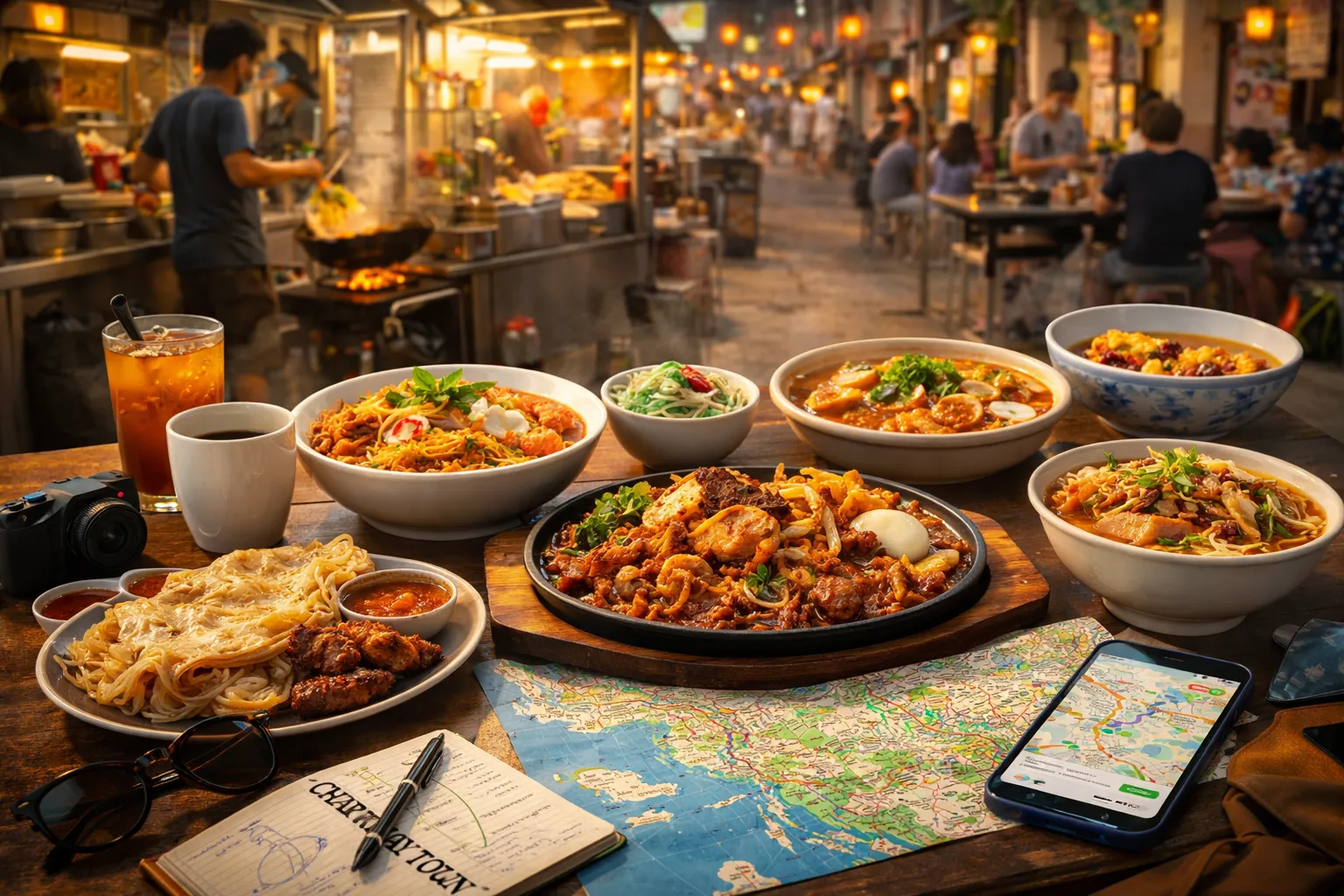
Welcome to the Culinary Heart of Southeast Asia
 Penang’s status as a global food hub is confirmed by international awards from publications like Time Out and Taste Atlas.
Penang, an island state off the northwestern coast of Peninsular Malaysia, is more than just a travel destination; it is a vibrant, living testament to the power of food to shape culture, history, and identity. Renowned globally as a food paradise, Penang offers an unparalleled culinary journey that tantalizes the taste buds and immerses visitors in a rich tapestry of flavors. The island’s unique geographical position and its multicultural heritage—a harmonious blend of Malay, Chinese, Indian, and Peranakan influences—have fostered a distinct and celebrated cuisine. This gastronomic wonderland is most famously expressed through its legendary hawker centers, bustling hubs of activity where generations of families have perfected their craft, serving up an astonishing array of delicious and affordable dishes.
The sheer breadth and depth of Penang’s food scene have earned it international acclaim. Time Out, for instance, ranked Penang as the best street food destination in Asia in September 2025, a testament to the quality and authenticity found on its streets. Furthermore, in 2023, the international food website Taste Atlas recognized Penang’s culinary prowess by naming it the 39th best food region in the world Penang was named the 39th best food region in the world by the international food website Taste Atlas in 2023. These accolades underscore that Penang is not merely a place to eat; it is a destination where food is an art form, a social cornerstone, and an essential part of the travel experience. The dedication to preserving traditional recipes and techniques, coupled with an evolving culinary landscape that embraces innovation, makes Penang a perpetually exciting place for any foodie.
This comprehensive guide is crafted to be your indispensable companion on a culinary adventure through Penang. We will navigate the labyrinthine streets, decode the ordering etiquette, and most importantly, introduce you to the must-try dishes and the iconic hawker centers that define this island’s gastronomic soul. Whether you are a seasoned traveler or embarking on your first exploration of Southeast Asian cuisine, this Penang food map will equip you with the knowledge to experience the island’s culinary heart with confidence and delight.
Why Penang is a Foodie’s Paradise
 Penang’s unique cuisine is a melting pot of Malay, Chinese, Indian, and Peranakan (a blend of Chinese and Malay) culinary traditions.
Penang’s unparalleled status as a food paradise is not accidental; it’s a result of a unique confluence of factors that create an ecosystem where exceptional food thrives. At its core is the island’s rich history as a trading port, which brought diverse populations and their culinary traditions to its shores. This continuous influx of cultures—Malay, Chinese (comprising various dialect groups like Hokkien, Teochew, Cantonese, and Hakka), Indian (including South Indian and North Indian influences), and Peranakan (Straits Chinese)—has led to an extraordinary fusion of ingredients, cooking methods, and flavor profiles. This blend is the foundation of Penang’s distinctive cuisine, offering a complexity and depth that is rarely found elsewhere.
The affordability and accessibility of high-quality food are also critical components of Penang’s appeal. Hawker food, the island’s culinary backbone, offers world-class flavors at prices that are remarkably low. This democratization of delicious food means that everyone, from locals to budget-conscious travelers, can indulge in the island’s gastronomic treasures. In 2023, the wholesale and retail trade, along with the food & beverage and accommodation sub-sectors, accounted for a significant 15.5% of Penang’s services sector GDP In 2023, the wholesale and retail trade, along with the food & beverage and accommodation sub-sectors, accounted for 15.5% of Penang’s services sector GDP. This economic contribution highlights the vital role the food industry plays in the region. Furthermore, the Malaysian foodservice market, as a whole, is projected for substantial growth, expected to reach $30.74 billion by 2031, indicating a robust and expanding culinary landscape across the nation, with Penang at its forefront The Malaysian foodservice market is projected to grow from $16.67 billion in 2026 to $30.74 billion by 2031, at a compound annual growth rate (CAGR) of 13.05%.
Beyond the economic figures, it is the palpable passion for food among its people that truly defines Penang. Food is not just sustenance; it is a source of pride, a topic of endless conversation, and a ritual to be savored. Hawker stalls are often family-run businesses, passed down through generations, each chef meticulously guarding their unique recipe and cooking techniques. This dedication to heritage ensures that traditional flavors are preserved while also allowing for subtle innovations that keep the cuisine dynamic. The sheer variety means there is always something new to discover, catering to every palate and craving.
What This Guide Offers: Your Essential Hawker Compass
This guide is designed to be your definitive compass for navigating Penang’s vibrant and sometimes overwhelming food landscape. We aim to demystify the experience, providing you with practical knowledge and insider tips to make your culinary journey seamless and unforgettable. Our focus is on empowering you to explore the heart of Penang’s food culture: its hawker centers.
Firstly, we delve into the unique culture surrounding hawker food, explaining its historical roots, its social significance, and what makes it more than just a meal. Understanding this context will deepen your appreciation for the food you eat and the people who prepare it. We will then equip you with essential insider tips and etiquette for navigating the hawker scene like a seasoned local. This includes deciphering the often-unconventional address system, mastering the art of ordering, understanding seating protocols, and ensuring your hygiene and safety concerns are addressed.
Crucially, this guide presents a curated Penang food map, highlighting the must-try dishes that have earned Penang its global reputation, alongside a selection of essential dishes that offer a broader taste of the island’s culinary diversity. For each iconic dish, we will explore its key ingredients, its unique flavors, and the craft involved in its preparation. We also spotlight renowned hawker centers and their particular specialties, guiding you to the best locations to sample these culinary delights.
To provide a holistic view, we extend our exploration beyond hawker fare, touching upon traditional coffee shops (kopitiams), bustling morning markets, and the emerging high-end dining scene. Finally, practical travel advice, from transportation to accommodation and budgeting, will ensure you can plan your Penang food adventure effectively. Our objective is to provide comprehensive, actionable information, making this guide an indispensable resource for every foodie eager to explore Penang’s extraordinary culinary offerings.
Understanding Penang’s Unique Hawker Culture: More Than Just Food
Penang’s hawker culture is a vibrant ecosystem, a living museum of culinary history, and a social nexus that binds communities together. It’s a phenomenon that transcends mere eating; it’s an immersive experience deeply woven into the fabric of daily life on the island. To truly appreciate Penang’s food, one must first understand the essence of its hawker scene.
A Rich Tapestry of Histories and Flavors
The roots of Penang’s hawker culture are deeply embedded in its past as a colonial trading hub and a magnet for immigrants from across Asia. As people from different linguistic and ethnic backgrounds settled in Penang, they brought with them their cherished recipes and cooking traditions. The early 20th century saw the rise of street vendors, selling their wares from pushcarts and small stalls, catering to the burgeoning population. Over time, these vendors coalesced into organized food markets and, eventually, dedicated hawker centers.
This melting pot of influences is directly reflected in the diverse flavors of Penang. The sweet, sour, and spicy notes characteristic of Malay cuisine mingle with the wok-fired aromas of Chinese cooking, the fragrant spices of Indian curries, and the unique herbaceousness of Peranakan dishes. The careful selection and combination of ingredients, from pungent shrimp paste (belacan) and fiery chilies to tangy tamarind and aromatic herbs, create a complex flavor profile that is unmistakably Penang. The evolution of these recipes is a testament to the adaptability and creativity of generations of chefs, each contributing to the culinary narrative. Understanding these histories provides a profound appreciation for the depth and breadth of the food available.
The Sensory Symphony: Immersion into Hawker Life
Stepping into a Penang hawker center is an assault on the senses, in the most exhilarating way possible. The air is thick with a symphony of aromas: the sizzle of Char Koay Teow hitting a scorching hot wok, the fragrant steam of Hokkien Mee broth, the sweet, caramelized scent of satay grilling, and the exotic spice blend of Nasi Kandar. Visually, it’s a kaleidoscope of activity. Brightly lit stalls showcase vibrant ingredients, from mounds of fresh seafood and colorful vegetables to glistening bowls of noodles and simmering curries. The constant hum of conversation, the clatter of plates and cutlery, the calls of vendors, and the rhythmic clang of spatulas on woks create a lively, energetic soundscape.
This environment fosters a unique sense of community. Hawker centers are democratic spaces where people from all walks of life – office workers, families, students, tourists – gather to share a meal. Observing the interactions, the camaraderie between stall owners, and the familiar routines of regulars offers a glimpse into the local way of life. The efficiency of the hawker kitchen is remarkable; many chefs have honed their craft over decades, developing lightning-fast techniques to prepare dishes with precision. The entire experience—from the initial sensory overload to the satisfaction of a delicious, affordable meal—is a vital part of understanding Penang’s food culture.
The Craft of the Hawker: Passion in Every Plate
At the heart of Penang’s hawker culture are the individuals who dedicate their lives to the art of cooking. These are not just cooks; they are artisans, chefs who have mastered their craft through years of practice, often learning from parents and grandparents. The word “craft” is particularly apt here, as it speaks to the skill, dedication, and passion poured into every dish. Many hawkers rise before dawn to source the freshest ingredients from local markets, preparing their signature broths, sauces, and marinades.
The commitment to quality is paramount. Even for a simple plate of noodles, the selection of ingredients—the freshness of the prawns, the quality of the soy sauce, the ripeness of the tomatoes—makes a significant difference. The technique employed by a skilled chef, such as the precise temperature control for frying Char Koay Teow or the delicate balance of spices in a Laksa broth, is what elevates a dish from ordinary to extraordinary. For instance, the signature smoky “wok hei” (breath of the wok) in Char Koay Teow is a direct result of a chef’s mastery over extremely high heat. Many hawkers operate with a deep sense of pride and responsibility, seeing their stall not just as a business but as a cultural legacy. While Penang may not yet boast numerous Michelin-starred establishments in the fine dining sense, the dedication and skill evident in its hawker kitchens are undeniably on par with that of many internationally recognized chefs. The MICHELIN Guide has recognized this excellence, with Penang featuring 25 Bib Gourmand establishments in 2024, nearly half of which are street food stalls In 2024, Penang featured 25 Bib Gourmand establishments in the MICHELIN Guide, with nearly 50% being street food stalls. This highlights the high standards of quality and value found in Penang’s hawker scene.
Navigating the Hawker Scene Like a Pro: Insider Tips & Essential Etiquette
Penang’s hawker centers are vibrant, bustling, and incredibly rewarding, but they can also seem daunting to the uninitiated. Mastering the local customs and practicalities will transform your experience from potentially confusing to utterly enjoyable. This section provides you with the insider knowledge needed to navigate the scene like a seasoned pro.
Deciphering the “Local Address” System for Food Stalls
Penang’s address system for hawker stalls can be famously bewildering for newcomers. Instead of formal street numbers, stalls are often identified by their location within a specific hawker center, a lane (like “New Lane” or “Chulia Street”), or by their proximity to a well-known landmark, often referred to as the “local address.” This system relies heavily on local knowledge and observation.
When seeking a specific stall, ask locals for directions referencing the hawker center name or the nearby landmark. For instance, a stall might be described as “opposite the mosque on Kimberley Street” or “near the large tree in Cecil Street Market.” Many popular stalls develop a reputation based on their owners’ names or the specific dish they are famous for. Don’t be afraid to ask your hotel concierge, taxi driver, or fellow diners for guidance. Online food blogs and forums often provide detailed descriptions and even approximate map locations, which can be invaluable. While this system can be challenging initially, it adds a layer of local charm and adventure to your food quest.
Mastering the Art of Ordering: Protocols and Patience
Ordering at a hawker stall is a straightforward process, but understanding the unspoken rules ensures a smooth transaction. Generally, you approach the stall, queue if there is one, and place your order directly with the vendor. It’s customary to state clearly what you want, specifying any modifications (e.g., “no chili,” “extra shrimp”). Many vendors have their menus displayed, but if not, you can point or ask for recommendations.
Patience is a virtue in the bustling hawker environment. Most popular stalls cook in small batches, often preparing only a few portions at a time to ensure freshness and quality. This means there might be a wait, especially during peak hours. Embrace the wait as part of the experience; observe the chef’s technique, soak in the atmosphere, and anticipate the delicious meal to come. If you are ordering multiple dishes from different stalls, it’s polite to collect them one by one or designate one person to order while others secure a table. Learning a few basic Malay or Hokkien phrases like “Terima kasih” (Thank you) or “Kamsiah” (Thank you in Hokkien) can be appreciated by the vendors.
Securing Your Spot: Seating and Table Management
Hawker centers can get crowded, so securing a table efficiently is key. Many centers have communal seating, meaning you can sit at any unoccupied table. If you arrive with a group, it’s often best for one person to scout for a table while the others order. Some stalls may have their own designated seating areas.
A common practice in Penang is “booking” a table by placing a packet of tissues or an umbrella on it while you are ordering. When the food is ready, you bring it back to your designated spot. Be mindful of others and avoid hogging tables, especially during busy periods. If a table is shared, and other patrons arrive, it’s polite to make space. The shared nature of seating fosters a sense of community and is an integral part of the hawker center experience.
Food Hygiene and Safety: What to Look For
While Penang’s hawker food is renowned for its quality, it’s natural to have concerns about hygiene. The good news is that most hawkers adhere to high standards, and local authorities conduct regular inspections. A simple visual check can offer reassurance.
Look for stalls that appear clean and well-maintained. Observe the vendors’ personal hygiene—do they handle food with gloves or utensils? Are raw and cooked ingredients stored separately? Check if the preparation surfaces are clean. Many stalls display hygiene ratings awarded by local health authorities, often graded from A (excellent) to C (unsatisfactory). A Grade A rating signifies excellent hygiene standards and is highly recommended Grade A 86-100 points Excellent hygiene standards; highly recommended. If a stall has a consistently long queue, it’s often a good indicator of both popularity and quality, which usually correlates with good hygiene practices. Trust your instincts; if a stall looks questionable, it’s best to try another.
Payment Pointers: Cash or Card?
The vast majority of hawker stalls in Penang operate on a cash-only basis. It is essential to carry sufficient Malaysian Ringgit (MYR) with you when visiting hawker centers. While some newer or more established stalls within larger food courts might accept digital payments or even credit cards, this is not the norm for most traditional street-side vendors. Having small denominations of cash will make transactions smoother. Change is usually provided promptly, but it’s always good to double-check your amount.
Beyond the Main Dish: How to Order Drinks and Desserts
Hawker centers often feature dedicated drink stalls, identifiable by their wide array of beverages. You can order refreshing options like fresh fruit juices, iced teas, coffee (kopi), Milo (a chocolate malt drink), and various local concoctions like Sirap (rose syrup with soda) or Kopi O’ (black coffee). Many drink stalls also offer local desserts such as Cendol and Ais Kacang.
It’s common to order your drinks from a separate stall and bring them to your table. Sometimes, if you order from a specific food stall, they might facilitate ordering drinks for you from an affiliated vendor. For popular desserts like Cendol or Ais Kacang, there are often dedicated stalls that specialize in these sweet treats, usually located within the same hawker complex. Enjoying a drink and a dessert after your main meal is a quintessential part of the Penang hawker experience.
The Penang Food Map: Must-Try Dishes & Top Hawker Centers
This is where the culinary adventure truly unfolds. Penang’s food scene is defined by a collection of iconic dishes, each with its own unique character, history, and legions of devoted fans. This section guides you through the absolute must-tries and points you towards the best places to savor them.
The Iconic Four: Penang’s Culinary Pillars
These four dishes are considered the quintessential Penang experience, representing the pinnacle of the island’s hawker cuisine. Each offers a complex interplay of flavors and textures, reflecting the heritage and craft of their creators.
- Char Koay Teow (Fried Flat Rice Noodles): Perhaps the most famous Penang dish, Char Koay Teow is a stir-fry of flat rice noodles (koay teow) and yellow noodles with shrimp, cockles, eggs, bean sprouts, and chives, all cooked over extremely high heat. The magic lies in the “wok hei,” the smoky aroma imparted by the searing hot wok, and the rich, savory sauce derived from dark soy sauce, chili paste, and prawn stock. The key ingredients are fresh, plump prawns and the specific technique of the chef. Look for stalls that use charcoal fire for that authentic smoky flavor.
- Penang Assam Laksa: A dish of stark contrasts and complex layers, Penang Assam Laksa is a sour and spicy fish-based noodle soup. The broth is made from mackerel, tamarind, chilies, lemongrass, galangal, and a host of other aromatics, creating a vibrant, tangy base. It’s served with thick rice noodles (laksa noodles), shredded cucumber, pineapple, onions, and mint leaves, often garnished with a dollop of shrimp paste (hae ko). The balance of sourness from tamarind, spiciness from chilies, and the umami from the fish is what makes this dish so addictive. The inclusion of fresh tomatoes adds a subtle sweetness and acidity.
- Hokkien Mee (Prawn Mee): Also known as Penang Hokkien Mee, this dish is a rich and aromatic noodle soup. The star is its deeply flavorful broth, simmered for hours with prawn shells and heads, pork bones, and various spices, creating a complex, spicy, and slightly sweet base. It’s typically served with a combination of yellow noodles and vermicelli, topped with boiled prawns, sliced pork, bean sprouts, and a hard-boiled egg, garnished with fried shallots and a spoonful of sambal chili. The intensity of the prawn flavor is paramount.
- Nasi Kandar: More of a culinary experience than a single dish, Nasi Kandar is an Indian Muslim dish that has been adopted and perfected by Penang. It consists of steamed white rice served with a variety of curries and side dishes, the most notable feature being the “banjir” (flood) of assorted curries poured over the rice. Diners choose from an array of choices, including curries like chicken, lamb, beef, fish, and squid, as well as fried chicken, squid roe, and okra. The art lies in selecting the right combination of gravies and dishes to create a harmonious flavor explosion.
Beyond the Icons: Essential Dishes to Explore
While the “Iconic Four” are essential, Penang’s culinary landscape extends far beyond them, offering a wealth of other delightful dishes.
- Rojak: A vibrant salad dish, Penang Rojak comes in two main variations: fruit rojak and pasembur (a type of Indian salad). Fruit rojak typically includes pineapple, guava, apples, jicama, and sometimes fried dough fritters, all tossed in a thick, sweet, and savory sauce made from shrimp paste, chili, sugar, and lime juice, topped with crushed peanuts. Pasembur is a more substantial dish with shredded cucumber, turnip, bean sprouts, fried octopus, crab stick, and hard-boiled egg, all drizzled with a sweet peanut sauce.
- Cendol & Ais Kacang: These are the quintessential Penang desserts. Cendol is a shaved ice dessert with green pandan jelly noodles, palm sugar syrup (gula Melaka), coconut milk, and often red beans. Ais Kacang, meaning “ice bean,” is a towering mountain of shaved ice, drizzled with colorful syrups and condensed milk, and topped with various ingredients like red beans, sweet corn, grass jelly, grass jelly, and attap chee (palm seeds).
- Kway Teow Th’ng: A comforting noodle soup dish featuring flat rice noodles in a light, clear broth, typically made from pork and chicken. It’s usually served with slices of fish cake, minced pork, chives, and sometimes prawns.
- Wan Tan Mee: Another popular noodle dish, often served in two ways: dry with a dark, savory sauce and chili, or in a light broth. It features springy yellow noodles, char siu (barbecued pork), and wontons (wan tan).
- Satay: Skewered and grilled marinated meat (chicken, beef, or lamb), served with a rich, spicy peanut sauce, cucumber, onions, and rice cakes (ketupat).
- Popiah: A fresh, spring-roll-like dish with a thin crepe wrapper filled with shredded turnip, bean sprouts, lettuce, egg, and sometimes shrimp or peanuts, drizzled with sweet sauce and chili.
- Curry Mee: A spicy, coconut-based noodle soup, similar to laksa but with a distinct curry flavor. It’s often served with a mix of yellow noodles and vermicelli, chicken, shrimp, bean sprouts, and a dollop of sambal.
- Pasembur: As mentioned under Rojak, this Indian salad is a hearty mix of shredded vegetables, fried items, and a flavorful peanut sauce.
Notable Hawker Centers & Their Specialties
Penang boasts numerous hawker centers, each with its own unique atmosphere and culinary gems. Exploring these centers is an adventure in itself.
- Gurney Drive (Persiaran Gurney) Hawker Centre: Once the most famous, this waterfront spot offers a wide variety of Penang classics. It’s a great place for a first-time visitor to sample many dishes, though some locals argue it has become more tourist-oriented. Expect all the popular dishes like Char Koay Teow, Laksa, and Satay.
- New Lane Hawker Centre (Lorong Baru): Situated on Jalan Macalister, this vibrant night hawker spot is a local favorite. It’s particularly renowned for its Char Koay Teow, Hokkien Mee, and satay. The atmosphere is lively, with many stalls operating under the glow of fluorescent lights.
- Chulia Street Night Hawker Stalls (Lebuh Chulia): This bustling street transforms into a gastronomic haven at night. You’ll find a diverse range of food, including oyster omelets, satay, Char Koay Teow, and unique street snacks. It’s a great place to wander and sample various offerings.
- Cecil Street Market (Pasar Cecil): This is a busy wet market during the day and transforms into a popular hawker spot in the evening. It’s known for its authentic Penang dishes at very reasonable prices, frequented by locals. Specialties include Hokkien Mee, Penang Rojak, and various noodle soups.
- Padang Brown Food Court (Jalan Johor): One of the oldest and largest hawker complexes, Padang Brown is divided into two sections: one open-air and one covered. It’s a treasure trove of Penang’s culinary heritage, with generations-old stalls serving dishes like Curry Mee, Rojak, and various types of soup noodles.
- Kimberly Street (Lebuh Kimberly): Famous for its night food scene, Kimberly Street is a must-visit. It’s particularly known for its Duck Kway Chap, Char Koay Teow, and the famous Penang Road Famous Teochew Chendul.
- Pulau Tikus Market: This morning market is a bustling local hub that also houses excellent food stalls. It’s a great spot for breakfast or an early lunch, offering dishes like Kway Teow Th’ng, Wantan Mee, and fresh seafood.
Beyond Hawker Fare: Other Culinary Discoveries in Penang
While hawker food is undoubtedly Penang’s crown jewel, the island’s culinary offerings extend far beyond the street stalls, presenting a broader spectrum of tastes and experiences. Exploring these other facets provides a more complete picture of Penang’s dynamic food culture.
Traditional Coffee & Tea Shops (Kopitiams): A Cultural Experience
Kopitiams, traditional Malaysian coffee shops, are an integral part of the local culture and a delightful place to experience authentic Penang flavors. These establishments offer a more relaxed setting than the bustling hawker centers, often serving classic breakfast items and traditional beverages.
Here, you can enjoy a strong, aromatic cup of kopi (coffee) or teh (tea), brewed to perfection and often served with condensed milk or evaporated milk. They are famous for their roti bakar (toasted bread) served with kaya (coconut jam) and butter, and soft-boiled eggs, a simple yet satisfying breakfast. Many kopitiams also serve local delicacies like Nasi Lemak (coconut rice with sambal and accompaniments) and Hokkien Mee, offering a different, often more subdued, experience of these iconic dishes. The kopitiam is a place for community, conversation, and savoring the simple pleasures of good food and drink.
Morning Markets: Fresh Ingredients and Local Life
The early hours in Penang are marked by the vibrant activity of its morning markets. Places like the Pulau Tikus Market or the Chowrasta Market are not just places to buy fresh produce; they are culinary hubs where the island’s food culture comes alive. Here, you can witness the sourcing of the prime ingredients that make Penang’s dishes so delicious—fresh seafood, aromatic herbs, vibrant chilies, and locally grown vegetables.
These markets offer an authentic glimpse into daily life, with vendors and locals engaging in spirited bartering. For the adventurous foodie, it’s an opportunity to see where the magic begins. Many market stalls also serve humble yet incredibly flavorful breakfast and lunch dishes, often using the freshest ingredients available that day. It’s a sensory immersion into the very essence of Penang’s culinary ecosystem.
High-End Penang Cuisine: A Different Flavor Palette
While Penang is celebrated for its affordable hawker fare, the island is also evolving its fine dining scene. Increasingly, chefs are drawing inspiration from the rich local culinary heritage, reinterpreting traditional dishes with modern techniques and presentations. This segment of Penang’s food landscape offers a different, more refined flavor palette.
Some restaurants are pushing boundaries by infusing international culinary concepts with local ingredients and flavors. While not as prevalent as hawker stalls, Penang does have establishments offering sophisticated dining experiences that highlight the complexity of Malaysian cuisine. These can range from restaurants that elevate traditional Malay and Chinese dishes to those exploring fusion cuisine, offering a contrast to the everyday hawker experience. The presence of a growing number of establishments recognized by international guides signals this evolution.
Food Tours: Guided Culinary Adventures
For those who want a structured and insightful exploration of Penang’s food scene, guided food tours are an excellent option. These tours are typically led by knowledgeable locals who can share historical context, culinary secrets, and guide participants to the best stalls, often bypassing the need to decipher the “local address” system independently.
Food tours offer a curated experience, usually focusing on a specific area or type of cuisine. They provide an opportunity to sample a variety of signature dishes in manageable portions, learn about the ingredients and cooking methods directly from the guide, and gain a deeper understanding of the cultural significance of food in Penang. Many tours also incorporate visits to local markets or traditional coffee shops, offering a well-rounded culinary perspective. This can be particularly beneficial for first-time visitors looking to maximize their food exploration and gain insider knowledge.
Planning Your Penang Food Adventure: Practical Travel Tips
A successful culinary pilgrimage to Penang requires a bit of practical planning. From navigating the island to choosing where to stay and how to budget, these tips will ensure your focus remains on the delicious food.
Getting Around Penang: Transport Options
Penang offers a variety of transportation options to suit different preferences and budgets, making it relatively easy to access its culinary hotspots.
- Taxis and Ride-Sharing Apps: Taxis are readily available, though it’s advisable to opt for metered fares. Ride-sharing apps like Grab are very popular and offer a convenient and often more affordable way to get around the island, especially for longer distances or to reach specific hawker centers.
- Buses: The public bus system (Rapid Penang) is extensive and covers most of the island, providing a very economical way to travel. Routes often pass by major food destinations.
- Walking: Within Georgetown, many hawker centers and attractions are within walking distance of each other. Exploring on foot is highly recommended to soak in the atmosphere and discover hidden culinary gems.
- Cycling: Renting a bicycle is another popular way to explore Georgetown and its surroundings, offering a flexible and environmentally friendly option.
- Motorcycle/Scooter Rental: For those comfortable with it, renting a motorcycle or scooter offers the ultimate freedom to navigate Penang’s roads and reach less accessible food spots.
Best Times to Visit for Foodies
Penang is a year-round food destination, but certain periods might offer a slightly more comfortable experience for travelers. The weather is generally tropical, with high humidity and temperature.
- Dry Season (December to February): This period typically sees less rainfall and pleasant temperatures, making it ideal for exploring hawker centers and outdoor markets. It is also a peak tourist season, so expect larger crowds.
- Shoulder Seasons (March to May and September to November): These months can be warm and humid, with occasional rain showers, but generally offer a good balance of pleasant weather and fewer crowds. The September to November period can sometimes see more rain due to the northeast monsoon.
- Monsoon Season (June to August): While this is the wetter period, the rain often comes in short, heavy bursts, usually in the afternoon, leaving mornings and evenings clear for food exploration. This is also the off-peak season, meaning potentially lower prices and fewer tourists.
Regardless of the season, always be prepared for humidity and occasional rain. The Malaysian foodservice market is set for significant growth, indicating a consistently vibrant culinary scene year-round The Malaysian foodservice market is projected to grow from $16.67 billion in 2026 to $30.74 billion by 2031, at a compound annual growth rate (CAGR) of 13.05%.
Accommodation Recommendations
When planning your food adventure, choosing accommodation strategically can enhance your experience. Consider staying in or near areas with a high concentration of food attractions.
- Georgetown: The UNESCO World Heritage Site is the heart of Penang’s culinary scene. Staying here puts you within walking distance of numerous hawker centers, heritage streets, and local markets. Options range from boutique heritage hotels and guesthouses to more modern hotels.
- Gurney Drive Area: If you prefer to be close to the famous Gurney Drive Hawker Centre and enjoy the sea breeze, this area offers various hotels, from budget-friendly to upscale.
- Batu Ferringhi: For those seeking a beach resort experience alongside their food journey, Batu Ferringhi offers numerous resorts. However, it’s further from Georgetown’s core hawker scene, requiring travel time.
- Bayan Lepas: Closer to the airport, this area is more commercial and industrial, with fewer heritage attractions or immediate access to the most famous hawker stalls, but can offer convenient options for transit or business travelers.
Penang welcomed a significant number of hotel guests in 2024, with an increase of 13.3% from the previous year, indicating a robust tourism sector that supports the demand for culinary exploration Penang welcomed 8,237,072 hotel guests in 2024, marking a 13.3% increase from 7,272,526 guests in 2023.
Budgeting for Your Food Journey
One of Penang’s greatest draws is the affordability of its incredible food. You can eat like royalty on a modest budget.
- Hawker Food: A typical meal at a hawker stall can cost anywhere from MYR 5 to MYR 15 (approximately USD 1 to USD 3). Drinks are usually MYR 2 to MYR 5.
- Kopitiams: Breakfasts at kopitiams are also very affordable, often within the MYR 10 to MYR 20 range.
- Mid-Range Restaurants: While more expensive than hawkers, even mid-range restaurants are reasonably priced compared to Western standards, with meals typically costing MYR 30 to MYR 60 per person.
- Fine Dining: Restaurants aiming for a Michelin-starred experience or higher-end dining will naturally be more expensive, potentially costing MYR 100+ per person for a multi-course meal.
The online food delivery market in Malaysia reflects a strong appetite for accessible food, valued at US$2.7 billion in 2023 and projected to reach $6.1 billion by 2032, demonstrating the widespread demand for diverse food options, from hawker fare to restaurant meals The online food delivery market in Malaysia was valued at US$2.7 billion in 2023 and is projected to reach $6.1 billion by 2032. For a dedicated foodie, budgeting MYR 50 to MYR 100 per day per person for food (allowing for multiple meals and drinks) would offer a very generous and diverse culinary experience.
Final Thoughts
Penang stands as an undisputed titan in the global culinary landscape, a place where food is not merely sustenance but the very essence of its identity. From the fragrant steam rising from a hawker’s wok to the bustling energy of a night market, every corner of this island whispers tales of history, culture, and an unwavering passion for flavor. Our exploration through this Penang food map has unveiled the intricate layers of its famous hawker culture, highlighted the iconic dishes that have cemented its reputation, and provided the essential tools for navigating this gastronomic wonderland.
The craft of the hawker, passed down through generations, transforms humble ingredients into extraordinary culinary experiences, earning Penang recognition from global authorities like Time Out and Taste Atlas. The island’s ability to maintain this high standard of street food, as evidenced by its numerous Bib Gourmand recognitions, speaks volumes about its dedication to quality and value. Beyond the renowned hawker stalls, Penang offers a richer tapestry, from the comforting rituals of traditional kopitiams to the evolving creativity in its fine dining restaurants, all